Report
Healthcare Equality Index 2026
Promoting Equitable and Inclusive Care for Lesbian, Gay, Bisexual, Transgender & Queer Patients and Their Families
Published by the Human Rights Campaign Foundation, May 2026

Healthcare Equality Index 2026
Table of Contents

Letter from Kelley Robinson
Healthcare is not a political issue. It is a human issue. And no human should have to wonder whether it is safe to seek it out.
For LGBTQ+ people, that trust has not always been guaranteed. Every day, members of our community enter healthcare settings during some of the most vulnerable moments of their lives. They arrive seeking answers, treatment, comfort, and hope. They deserve to know that they will be treated with dignity, respected for who they are, and able to access the care they need.
At the Human Rights Campaign Foundation, we believe healthcare decisions belong between patients and their doctors—not politicians. We also believe that every person deserves to know where to find care that is safe, affirming, and respectful. That is why the Healthcare Equality Index exists.
For nearly two decades, the HEI has served as the nation's leading benchmark for LGBTQ+ inclusion in healthcare. More than a recognition program, it is a roadmap for healthcare institutions committed to delivering equitable care and a trusted resource for LGBTQ+ people seeking it.
We also recognize that healthcare institutions are operating under extraordinary pressure, unlike any moment in those two decades. Legal uncertainty, regulatory changes, attacks on diversity and inclusion programs, and funding threats have created challenges unlike any we have seen in recent years.
Yet even in this environment, hundreds of healthcare facilities across the country continue to demonstrate that serving LGBTQ+ patients with dignity and respect is not optional—it is fundamental to quality care.
In the HEI 2026 survey cycle, 741 healthcare facilities across the country participated in this work. Of those, 323 earned the designation of LGBTQ+ Healthcare Equality Leader, and 343 earned the designation of LGBTQ+ Healthcare Equality High Performer. Together, nearly 90 percent of participating facilities earned one of these top two designations. This year’s cohort also included 49 new participants, and 53 facilities improved their designation from prior years.
These numbers show that even amid the current extraordinary pressure, many healthcare institutions are continuing to show up for LGBTQ+ patients and staff. To the healthcare providers, administrators, staff, and advocates doing this work inside your institutions: thank you. Your commitment sends a powerful message to LGBTQ+ people seeking care: you are seen, you are valued, and your health matters.
The healthcare leaders recognized in this report are helping demonstrate what that commitment looks like in practice. They are investing in policies, training, patient services, and workplace cultures that help ensure LGBTQ+ people are treated with dignity—not only in mission statements, but in exam rooms, emergency departments, patient portals, and everyday interactions.
That commitment deserves recognition. But this report is also a reminder that the work is far from finished.
Too many LGBTQ+ people still worry about how they will be treated when they walk through the doors of a healthcare facility. Too many transgender patients and families continue to face barriers to medically necessary care. And too many communities still lack clear information about where to find affirming care.
The Human Rights Campaign will continue working alongside healthcare providers, advocates, patients, and families to change that reality. Because every person deserves healthcare grounded in dignity, compassion, and respect.
That is the promise of the Healthcare Equality Index. And in this moment, it has never been more important.
Kelley Robinson , President, Human Rights Campaign Foundation , She/Her/Hers

Executive Summary
The Healthcare Equality Index 2026 arrives at a pivotal moment. LGBTQ+ patients, families, healthcare workers, and institutions face a healthcare landscape shaped by intensified political attacks, shifting legal requirements, and uncertainty around access to inclusive, medically necessary care. At the same time, healthcare professionals and administrators are being asked to uphold their commitments to quality, safety, dignity, and patient-centered care in an increasingly challenging environment.
The Human Rights Campaign Foundation recognizes the real pressures on healthcare facilities today. State laws, federal actions, anti-DEI efforts, and attacks on healthcare for transgender people have shaped a climate in which some institutions rethink how they communicate about LGBTQ+ inclusion, support staff, and maintain patient services. Still, the need for LGBTQ+ inclusive care has not diminished—it is even more urgent.
LGBTQ+ people face significant health disparities due to stigma, discrimination, unequal access to resources, and fear of mistreatment in healthcare. These barriers often cause patients to delay or avoid care, with serious consequences. Inclusive policies and practices are central to quality care. Explicit nondiscrimination policies, trained staff, accurate patient information, inclusive services, equitable employee benefits, and meaningful community engagement build patient trust.
For nearly two decades, the Healthcare Equality Index has been the national benchmark and roadmap for healthcare facilities working to strengthen LGBTQ+ patient-centered care. The HEI evaluates participating facilities across core areas of practice, including nondiscrimination and staff training; patient services and support; employee benefits and policies; and patient and community engagement. These criteria reflect one essential principle: LGBTQ+ patients, visitors, and staff deserve dignity, respect, and fairness in every healthcare setting.
In the HEI 2026 survey cycle, participation persisted despite rapidly evolving legal and political challenges. Across the United States, 741 healthcare facilities completed the HEI survey to assess their LGBTQ+ inclusive policies. Of these, 323 facilities (44%) received the LGBTQ+ Healthcare Equality Leader designation, while 343 facilities (46%) earned High Performer status. In total, 666 facilities—nearly 90% of all those surveyed—achieved one of the top designations. Notably, the 2026 cohort included 49 new participants, and 53 facilities improved their designation from prior years. These results indicate that many healthcare institutions are maintaining and even expanding LGBTQ+ inclusion efforts, despite increasingly complex circumstances.
This year’s report reflects that healthcare facilities nationwide are operating under significant and changing constraints. Due to ongoing threats at the federal level, state restrictions, and political volatility, HEI 2026 participants could opt not to display their individual scorecards in the HRC Foundation’s online search directory. Instead, this report presents aggregate findings: these high-level statistics enable national benchmarking, trend identification, and practical guidance while accounting for the complex environment in which many facilities deliver LGBTQ+inclusive care.
Access to medically necessary healthcare for transgender people is under threat across the country, with state bans, federal actions, investigations, and administrative decisions creating uncertainty for healthcare providers and profound harm for transgender and non-binary patients. As a result, all facilities listed in the online search directory will include a Transgender Healthcare Access Alert that links readers to a webpage with additional information and resources.
For facilities in states where medically necessary healthcare for transgender youth remains legally permissible, but where the facility fully discontinued transgender-specific medical services for adolescents and pediatric patients in response to threats from the Administration, the HRC Foundation has suspended public recognition of the facility’s HEI 2026 score and designation.
Even where political and legal constraints affect the availability of specific services, healthcare facilities remain responsible for ensuring that transgender and non-binary patients are treated with dignity, respect, and transparency. The HRC Foundation continues to call on all healthcare facilities to support transgender and non-binary patients to the fullest extent possible, including through nondiscrimination protections, respectful communication, accurate information, staff training, continuity of care, and appropriate referrals where available.
The HRC Foundation commends facilities using the HEI for reflection, accountability, and improvement. Participation is a public demonstration that LGBTQ+ patients and staff matter. Recognition is not the end. As LGBTQ+ people face debates about their care, families, and lives, healthcare institutions must not only provide clarity, compassion, and evidence-based care but also take decisive action to champion inclusive practices, actively support LGBTQ+ communities, and ensure safe, affirming environments for all.
The HEI 2026 helps healthcare facilities maintain and strengthen LGBTQ+inclusive care under extraordinary pressure. The report offers aggregate findings, benchmarks, and guidance for adaptation. The standard remains: every patient deserves safe, respectful, inclusive, dignified care.
HEI 2026 results show that healthcare facilities are advancing LGBTQ+ inclusive policies and practices despite significant external pressure. For healthcare leaders, the message is clear: LGBTQ+ inclusion is essential for safe, high-quality, trustworthy care. The HRC Foundation applauds participating facilities for their commitment and challenges all healthcare institutions to take immediate action by using the HEI as a roadmap to strengthen care for LGBTQ+ patients, families, staff, and communities.
By The Numbers
HEI 2026 Participants at a Glance

741 Participants
Facilities from 119 different non-profit, for-profit
and public health systems participate in the HEI
261 Teaching Hospitals
35 Federally Qualified Health Centers (or Look-Alikes)
34 Pediatric Hospitals
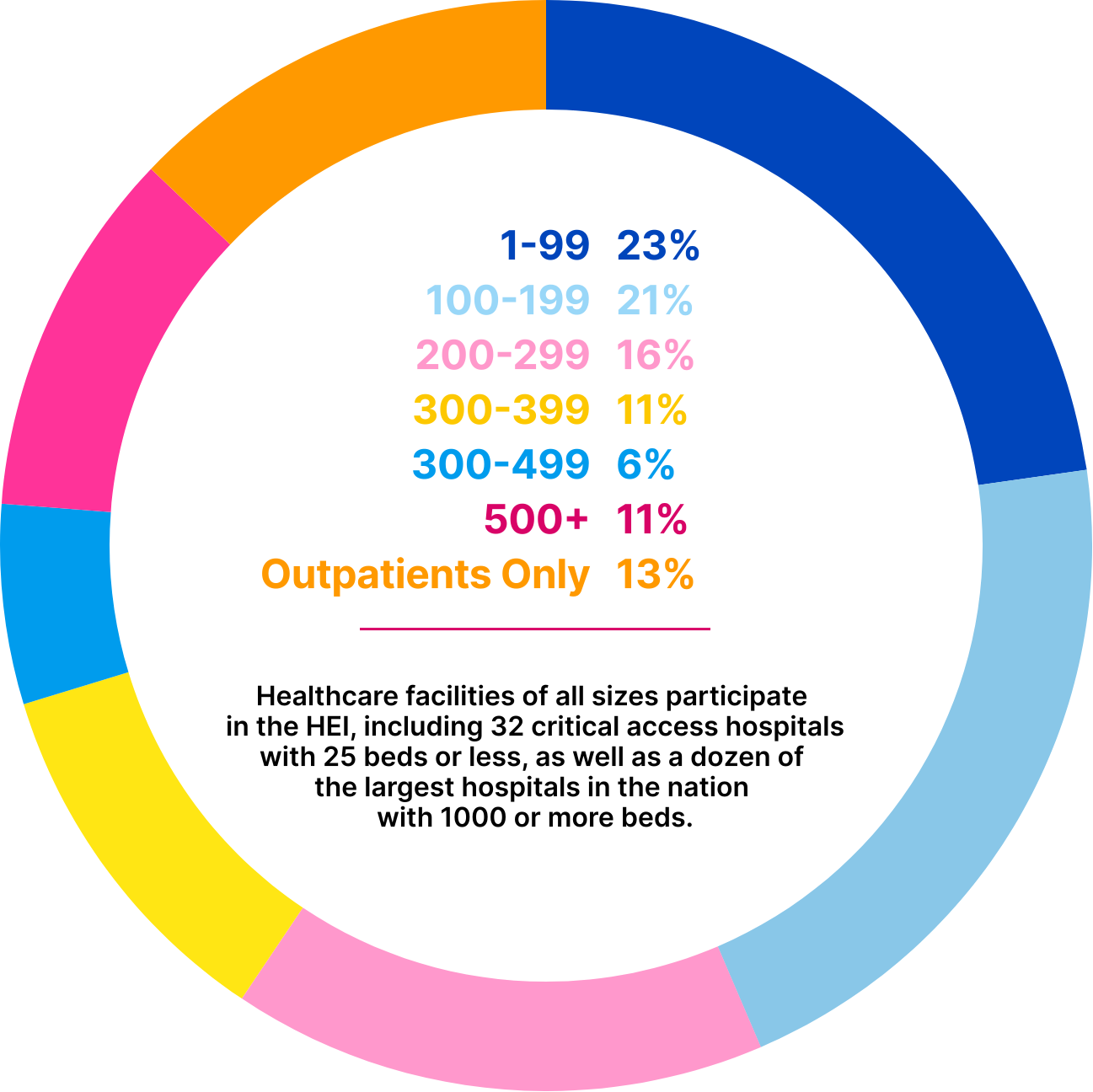
32 Critical Access Hospitals

Participants by Bed Size


Why the HEI Matters Now
LGBTQ+ people need healthcare they can trust. This need has always guided the Healthcare Equality Index, but in 2026, it is especially urgent. Nationwide, LGBTQ+ patients, families, healthcare workers, and healthcare institutions are navigating a period of intensified political attacks, changing legal requirements, and increased uncertainty about access to inclusive, medically necessary care.
These pressures are especially severe for transgender and non-binary people, whose access to medically necessary healthcare has been restricted by state laws, federal actions, investigations, and administrative decisions. However, the impact extends beyond any single service or patient group. When LGBTQ+ individuals see their rights debated, care limited, or identities politicized, mistrust in healthcare systems grows, making patients less likely to seek needed care.
This mistrust is longstanding. LGBTQ+ people continue to face health disparities due to stigma, discrimination, unequal access to resources, lack of culturally competent providers, and fear of mistreatment. These barriers often cause patients to delay or avoid care, leading to serious physical and mental health consequences. For those denied care, misgendered, excluded from decision-making, or treated disrespectfully, trust must be rebuilt through clear policies, trained staff, respectful communication, and consistent practice.
Inclusive care is integral to quality care. A healthcare facility’s commitment to LGBTQ+ patients is demonstrated not only in public statements but also in how patients are greeted, how their information is handled, whether their families are recognized, staff understanding of their needs, and consistent application of policies.
Research increasingly supports this link. A 2025 longitudinal study using HEI and HCAHPS data found that hospitals consistently participating in the HEI received higher patient ratings and recommendation scores than those that never participated. Among participating hospitals, stronger HEI performance also correlated with higher patient satisfaction. The study concluded that LGBTQ+ inclusion efforts are associated with improved patient satisfaction.*
Inclusive policies also matter for the healthcare workforce. A 2025 study examining HEI scores, nurse burnout, and job turnover found that higher HEI scores were associated with lower odds of nurses intending to leave their employer. The study also found that inclusive hospital policies positively affected job retention regardless of nurses’ burnout status, underscoring that inclusion can support workforce stability and patient-centered care.**
These findings underscore a key message for healthcare leaders: LGBTQ+ inclusion is not symbolic or isolated. It aligns with core institutional priorities, such as improving the patient experience, building trust, supporting staff, reducing harm, and creating responsive systems of care that meet the needs of the communities they serve.
The HEI offers a practical framework for advancing this work. For nearly two decades, the Healthcare Equality Index has helped healthcare facilities assess their policies and practices, identify gaps, and take measurable steps toward LGBTQ+ patient-centered care. The HEI criteria focus on core areas where institutional policy and patient experience meet: nondiscrimination and staff training, patient services and support, employee benefits and policies; patient and community engagement, and responsible citizenship.
This framework remains important even as challenges grow. Legal and political constraints may affect how some facilities provide or communicate about certain services, but they do not remove the responsibility to treat LGBTQ+ patients with dignity and respect. Even when specific services are restricted, facilities can uphold nondiscrimination policies, train staff, provide accurate information, protect privacy, support continuity of care, and offer referrals and resources where possible.
The current climate has made LGBTQ+ inclusion more challenging and, in some cases, less visible. Some facilities may be adapting how they communicate about this work. Others may be navigating real legal uncertainty. However, patients experience silence and ambiguity in concrete ways. A lack of clear information can leave LGBTQ+ patients and their families unsure if they will be respected, whether their families will be recognized, or whether their care needs will be understood.
The HEI matters now because it provides healthcare facilities with a practical, measurable, and accountable path forward. It helps institutions identify strengths, gaps, and areas for continued action in meeting the needs of LGBTQ+ patients and staff. Most importantly, it upholds a standard that should not depend on the political climate: every patient deserves safe, respectful, and inclusive care grounded in dignity.
*Yu H, McHugh MD, Bauermeister JA, et al. Impact of hospitals’ LGBTQ+ inclusion efforts on patient satisfaction from 2016 to 2023: a retrospective longitudinal observational study. BMJ Quality & Safety 2025;34:718-728.
**Yu H, Bauermeister JA, McHugh MD, Hanneman T, Lasater KB. Inclusive Hospital Policies, Nurse Burnout, and Job Turnover. Nurs Res. 2025 Sep-Oct 01;74(5):364-370.
Research Spotlight: Inclusion,
Patient Experience, and Workforce Stability
- Hospitals that consistently participated in the HEI from 2016 to 2023 had higher patient ratings and higher patient recommendation scores than hospitals that never participated.
- Among HEI-participating hospitals, higher HEI scores were associated with higher patient ratings and recommendations.
- Higher HEI scores were associated with lower odds of nurses intending to leave their employer.

Findings
The HEI 2026 findings are presented in aggregate to identify national trends, support benchmarking, and highlight key areas of progress and ongoing need. Given the rapidly changing legal and political environment, this year’s findings section is more streamlined than previous reports. Instead of detailing every criterion, the section focuses on selected policies and practices central to LGBTQ+ patient-centered care and most likely to reflect lasting institutional infrastructure.
The HEI 2026 scoring criteria continue to evaluate participating facilities across five areas:
Criteria 1: Non-Discrimination and Staff Training
Criteria 2: Patient Services and Support
Criteria 3: Employee Benefits and Policies
Criteria 4: Patient and Community Engagement
Criteria 5: Responsible Citizenship
The HRC Foundation provides resources to help facilities understand credit requirements and implement best practices for equitable and inclusive care for LGBTQ+ patients, families, and employees.
Criteria 1: Non-Discrimination and Staff Training
Criteria 1 evaluates whether facilities have and communicate foundational LGBTQ+ inclusive policies and training practices. The criteria require explicit inclusion of sexual orientation and gender identity or gender identity/expression in relevant policies, communication of these policies to patients, staff, and the public, and training related to LGBTQ+ patient-centered care.
Why This Matters
Non-discrimination policies and staff training form the foundation of LGBTQ+ patient-centered care. Policies clarify institutional expectations, while training ensures these expectations are consistently applied in interactions with patients, visitors, and staff. For LGBTQ+ patients, explicit protections for sexual orientation and gender identity reduce uncertainty about fair treatment. For staff, clear policies offer guidance and accountability.
This foundation is especially important in the current climate. Even when facilities face pressure regarding public communication of LGBTQ+ inclusion, patients and staff still require clear assurances that discrimination is not permitted and that respectful treatment is expected throughout the institution.
Key Findings


These foundational policies remained a central strength of HEI participants in 2026. These policies establish clear expectations that LGBTQ+ patients, visitors, and staff must be treated with dignity and respect, and provide a baseline for accountability across the institution. Staff training is equally important, especially as facilities navigate legal uncertainty, public pressure, and changing language around equity and inclusion. the current cultural and political climate. This underscores the need for practical, sustainable training approaches that help staff consistently apply LGBTQ+ inclusive policies in patient care.
What Facilities Can Do Now
Facilities can maintain or strengthen this foundation by:

Criteria 2: Patient Services and Support
Criteria 2 includes four subsections: LGBTQ+ Patient Services and Support; Transgender Healthcare Services and Support; Medical Decision-Making; and Patient Identification and Data Collection.
Why This Matters
Policies alone are not enough. LGBTQ+ patients need services, systems, and staff practices that make inclusive care real. Criteria 2 focuses on whether facilities have structures in place to identify and respond to LGBTQ+ patients’ needs, support respectful clinical encounters, collect patient information accurately, and ensure patients can make decisions about their care and families.
In 2026, this criterion also sits at the center of the current legal and political landscape. Some elements of patient services and support, particularly healthcare services for transgender people, have been directly affected by state restrictions, federal actions, politically motivated investigations, and institutional risk assessments.
Key Findings



Access to medically necessary healthcare for transgender people is under threat nationwide. Across the country, state restrictions, federal actions, politically motivated investigations, and administrative decisions have created uncertainty for healthcare providers and serious barriers for transgender and non-binary patients seeking care. These threats are particularly acute for adolescents and pediatric patients, whose access to care has been directly targeted by many state restrictions and federal actions.
Because access to healthcare for transgender people is changing rapidly in many states and communities, and because some facilities have paused, scaled back, or altered services in response to significant legal, regulatory, and financial threats, this report does not present aggregate findings on the current availability of transgender-specific healthcare services. Instead, the HEI 2026 includes a broader Transgender Healthcare Access Alert to help readers understand the environment in which facilities and patients are operating.
All healthcare facilities remain responsible for treating transgender and non-binary patients with dignity, respect, and transparency. Even where external constraints affect the availability of specific services, facilities can and should continue to support transgender and non-binary patients through clear nondiscrimination protections, respectful communication, accurate information, staff training, privacy protections, continuity of care, and appropriate referrals where available.
The HEI 2026 findings show that participating facilities continue to maintain systems that translate LGBTQ+ inclusive commitments into daily care. Practices such as health equity planning, protections for medical decision-making, and respectful patient identification and data collection help ensure that LGBTQ+ patients are accurately recognized, appropriately supported, and treated with dignity throughout their care experience.
In the current climate, these systems matter even more. When LGBTQ+ patients are unsure whether they will be welcomed or respected, clear and consistent practices can help build trust. Facilities that collect patient information respectfully, protect confidentiality, recognize families and support people, and train staff to apply inclusive practices are better positioned to provide safe, affirming, and patient-centered care.
What Facilities Can Do Now
Healthcare facilities can continue strengthening LGBTQ+ patient services and support by taking concrete steps that improve patient experience and reduce barriers to care:

For more information about best practices for care of transgender patients see the publication, Creating Equal Access to Quality Health Care for Transgender Patients: Transgender-Affirming Hospital Policies, from HRC Foundation, Lambda Legal, and the LGBT Rights Committee of the New York City Bar Association.

Criteria 3: Employee Benefits and Policies
Criteria 3 evaluates whether facilities provide LGBTQ+inclusive employee benefits and workplace policies and comprises three subsections: Equal Benefits, Additional Support for LGBTQ+ Employees, and Healthcare Benefits Impacting Gender-Diverse Employees.
Why This Matters
LGBTQ+ inclusive healthcare depends on LGBTQ+ inclusive workplaces. Healthcare facilities cannot fully support LGBTQ+ patients without also supporting the LGBTQ+ employees who provide care, lead teams, manage operations, and shape institutional culture. Inclusive employee benefits and workplace policies help ensure that LGBTQ+ employees and their families are treated fairly and have access to the same protections, supports, and opportunities as their colleagues.
This is especially important in a challenging healthcare environment. Hospitals and health systems continue to face workforce pressures, including burnout, staffing instability, and retention challenges. Inclusive policies can help build workplaces where employees feel respected, protected, and able to do their best work. As noted earlier in this report, recent research using HEI data found that higher HEI scores were associated with lower odds of nurses leaving their employers, underscoring that inclusive policies can support workforce stability and equity.
Key Findings


Download our whitepaper on the Importance of Providing Transgender-Inclusive Health Coverage

The HEI 2026 findings show that many participating facilities continue to support LGBTQ+ employees through inclusive benefits, workplace policies, and employee support structures. These practices help ensure that LGBTQ+ staff and their families are recognized, protected, and supported within the same institutions that are working to provide respectful care to LGBTQ+ patients.
In the current climate, maintaining these policies is an important signal of institutional consistency. When external pressure leads some organizations to reconsider how they talk about equity and inclusion, clear employee benefits and workplace supports help demonstrate that LGBTQ+ inclusion remains part of the facility’s operational commitments—not just a public-facing statement.
What Facilities Can Do Now
Healthcare facilities can continue strengthening LGBTQ+ employee inclusion by taking concrete steps that support fairness, retention, and workplace trust:

Download our whitepapers for more information on important LGBTQ+ benefits issues:
Criteria 4: Patient and Community Engagement
Criteria 4 evaluates how facilities engage with LGBTQ+ patients and communities and comprises two subsections: LGBTQ+ Community Engagement and Marketing and Understanding the Needs of LGBTQ+ Patients and Community.
Why This Matters
LGBTQ+ inclusive care is strengthened when healthcare facilities listen to, learn from, and build trust with the communities they serve. Patient and community engagement helps facilities understand the needs of LGBTQ+ people in their service areas, identify gaps in care, and create meaningful pathways for feedback, partnership, and improvement.
In the current climate, this work is especially important. Public visibility around LGBTQ+ inclusion may look different from one facility to another, but LGBTQ+ patients and communities still need clear signals that their experiences matter. Engagement is not only about outreach; it is about accountability, trust-building, and ensuring that patient care reflects the community’s needs.
Key Findings

The HEI 2026 findings show that patient and community engagement remains an important part of LGBTQ+ inclusive healthcare. The strongest practices in this area are those that help facilities listen, learn, and respond — including patient experience surveys, community partnerships, advisory input, research, and data analysis.
In the current climate, these practices are especially important because they help keep LGBTQ+ patients and communities connected to the institutions that serve them. Even when public communication may be more complicated, facilities can continue to build trust by creating meaningful opportunities for LGBTQ+ people to share their experiences, identify needs, and help shape more responsive care.
What Facilities Can Do Now
Healthcare facilities can continue strengthening patient and community engagement by taking concrete steps that support trust, feedback, and accountability:

Criteria 5: Responsible Citizenship
While healthcare facilities gain points based on the number of best practices they have in Criteria 1-4, Criteria 5 allows points to be deducted when healthcare organizations have policies or practices that may lead to discriminatory treatment or when there is a large-scale official or public anti-LGBTQ+ blemish on their record. There is both a major deduction of 25 points and a minor deduction of 5 points. The minor deduction is tied to policies or directives that prevent facilities from providing certain medically necessary treatments to some patients based on a diagnosis of gender dysphoria while allowing the same treatments for other diagnoses.
Why This Matters
Responsible Citizenship recognizes that written policies are only meaningful if facilities’ actions align with them. A facility cannot claim LGBTQ+ inclusion while maintaining or adopting practices that undermine LGBTQ+ equality or patient care, or failing to respond when providers or staff cause harm to an LGBTQ+ patient. This criterion seeks to hold facilities accountable for known actions or policies that conflict with the HEI’s goals.
Key Findings

Criteria 5 provides an accountability mechanism for known actions or policies that undermine LGBTQ+ equality or patient care. In the HEI 2026 cycle, 42 facilities received the minor Responsible Citizenship deduction. All were Catholic hospitals that follow the Catholic Ethical and Religious Directives, which can limit the provision of certain medically necessary procedures used in gender-affirming care, even when those same procedures may be available for other diagnoses. This deduction reflects the potential for such policies to result in discriminatory treatment that conflicts with a facility’s stated non-discrimination commitments.
At the same time, the HRC Foundation recognizes that some healthcare facilities have paused, scaled back, or stopped providing gender-affirming services because of the current political climate, significant legal and regulatory threats, and actions from the Administration. For the HEI 2026 cycle, the Responsible Citizenship penalty was not applied to facilities that paused, scaled back, or stopped gender-affirming services in response to these external threats. Those circumstances are distinct from voluntary policy choices or standing institutional directives that discriminate against LGBTQ+ patients or contradict a facility’s stated non-discrimination commitments. Even where external constraints affect the availability of specific services, facilities remain responsible for treating transgender and non-binary patients with dignity, transparency, and respect.
Rather than applying the Responsible Citizenship penalty in these cases, the HRC Foundation suspended the facility’s HEI score and designation. This means that although the facility may have technically met the HEI criteria and earned a score or designation through the survey process, HRC Foundation is not publishing that score or designation. Facilities whose status has been suspended have also been informed that they may not publish, promote, or otherwise represent themselves as holding an HEI 2026 score or designation while the suspension remains in place.
Suspension is a separate accountability tool from the Responsible Citizenship penalty. HRC Foundation has used suspension in a small number of prior cases where litigation was pending or an unresolved review was underway regarding an action taken by a healthcare facility. In the HEI 2026 context, suspension reflects the seriousness of facilities stopping legally available gender-affirming care while also recognizing the extraordinary external threats affecting healthcare institutions.
Regardless of score or designation status, HRC Foundation continues to expect all healthcare facilities to treat transgender and non-binary patients with dignity, transparency, and respect, and to support patients to the fullest extent possible.
What Facilities Can Do Now
Facilities can maintain responsible citizenship by:


How the HEI Works
Since 2007, the Healthcare Equality Index has served as the national benchmarking tool for healthcare facilities seeking to strengthen LGBTQ+ patient-centered care. Through a biennial survey, the HEI helps healthcare organizations assess their policies and practices, identify opportunities for improvement, and access resources that support more equitable and inclusive care for LGBTQ+ patients, visitors, and staff.
The HEI is both a measurement tool and a roadmap. Participating facilities use the survey to evaluate their progress across core areas of LGBTQ+ inclusion, including foundational nondiscrimination policies and staff training, patient services, employee benefits, community engagement, and responsible citizenship. Facilities that meet HEI standards may receive public recognition for their commitment to LGBTQ+ inclusive care.
The HEI is administered by the Human Rights Campaign Foundation, an exempt 501(c)(3) organization.
The HRC Foundation is the educational arm of the Human Rights Campaign, the nation’s largest LGBTQ+ civil rights organization. The HRC Foundation drives meaningful change in everyday spaces that shape LGBTQ+ lives — from classrooms and workplaces to healthcare facilities and local communities — by equipping people and institutions with tools to foster inclusion. Through research, education, and collaboration, the Foundation partners with institutions to support sustainable and measurable equity initiatives.
As a 501(c)(3) organization, the HRC Foundation does not engage in political or electoral work. It operates independently of any political affiliation, with a commitment to advancing equality through non-partisan initiatives focused on education, research, and collaboration with stakeholders.
There is no fee to participate in the HEI, and participation does not require organizations to financially support the Human Rights Campaign Foundation or the Human Rights Campaign.
The HEI is open to healthcare organizations in the United States with 100 or more employees, including inpatient and outpatient facilities, individual facilities, and healthcare systems. Inpatient facilities are particularly encouraged to participate and have historically represented the majority of HEI participants.
The HEI survey asks participating healthcare facilities a series of questions about LGBTQ+ inclusive policies and practices. These questions are divided into four criteria sections: non-discrimination and staff training; patient services and supports; employee benefits; and engagement with and a public commitment to the LGBTQ+ community. In addition, a fifth criterion section focuses on known activities or policies that may undermine LGBTQ+ equality or patient care.
Facilities earn points by meeting HEI requirements across Criteria 1-4, for a maximum score of 100. Criteria 5 allows for deductions when a facility has policies or practices that undermine LGBTQ+ equality or patient care.
Participating facilities may be recognized in one of three tiers:
LGBTQ+ Healthcare Equality Builder
Facilities at this level have demonstrated that they have key foundational policies in place for LGBTQ+ inclusion. These policies focus on patient nondiscrimination, equal visitation, and employment nondiscrimination, each of which must be codified and communicated. Facilities must also meet the required staff training component of Criteria 1.
LGBTQ+ Healthcare Equality High Performer
Facilities at this level have met the foundational requirements for Builder recognition and have adopted a minimum number of LGBTQ+ inclusive policies and practices across patient services and support, employee benefits and policies, and patient and community engagement. To receive this designation, facilities must earn full credit in Criteria 1, at least partial credit in Criteria 2, Criteria 3, and Criteria 4, and receive an overall score between 80 and 95.
LGBTQ+ Healthcare Equality Leader
Facilities at this level have demonstrated leadership in adopting LGBTQ+ inclusive policies and practices. To receive this designation, facilities must earn full credit in Criteria 1, 2, 3, and 4; meet the Training+ requirement; meet the criteria for transgender-inclusive healthcare benefits; and receive a top score of 100.
The HEI is designed to provide useful information to healthcare facilities, patients, families, and communities. Participating facilities’ scores and designations are made available through an online search directory and interactive map.
For the HEI 2026 cycle, participating facilities were given the option to opt out of having their individual scorecards displayed in the online search directory and interactive map. This option reflects the rapidly changing legal and political environment in which many healthcare facilities are operating. Facilities that opted to display their scorecards can be found in the online directory, along with approximately 1500 other non-scored healthcare facilities that are either past participants or were researched by the HEI team. These healthcare facilities do not receive a score, and their scorecard will only include information on whether they have the foundational policies outlined in Criteria Section 1 in place.
Also for the HEI 2026 cycle, all facilities listed in the online search directory will include a Transgender Healthcare Access Alert to help patients, families, and communities understand that access to medically necessary healthcare for transgender people may be limited, changing, or difficult to confirm.

About the Research and Education Program
The Healthcare Equality Index is a project of the Research & Education Program at the Human Rights Campaign Foundation. Research & Education advances LGBTQ+ equality by producing rigorous, data-driven insights that shape policy, inform public understanding, and strengthen advocacy. Through original research, survey analysis, public education, and technical assistance, the program elevates the lived experiences of LGBTQ+ people and supports institutions seeking to strengthen LGBTQ+ health, well-being, and inclusion.
Through the HEI, Research & Education benchmarks LGBTQ+ inclusive policies and practices in healthcare facilities nationwide and provides resources to help institutions improve care for LGBTQ+ patients, visitors, and staff. By translating research and data into accessible, actionable guidance, the program equips healthcare leaders, advocates, educators, and policymakers with tools to counter misinformation, address disparities, and drive meaningful change.
Special Thanks to HEI Participating Facilities
The Human Rights Campaign Foundation extends our deep gratitude to the healthcare providers, administrators, staff, and advocates at HEI participating facilities who continue to advance LGBTQ+ inclusion during an incredibly challenging time.
Across the country, healthcare professionals are working in an environment shaped by political pressure, legal uncertainty, misinformation, and direct attacks on LGBTQ+ people and their care. Yet many facilities continue to show up for LGBTQ+ patients, families, visitors, and staff by maintaining inclusive policies, strengthening patient-centered practices, and creating environments grounded in dignity and respect.
This work matters. For LGBTQ+ people seeking care, a welcoming policy, a trained staff member, a respected name or pronoun, a recognized partner or family member, or a clear statement of support can make a meaningful difference. These actions help build trust in moments when many LGBTQ+ patients may feel uncertain about whether they will be safe, understood, or treated fairly.
We thank the healthcare leaders and staff who continue to do this work with courage, compassion, and persistence. Your commitment helps ensure that LGBTQ+ people can access care that is respectful, inclusive, and grounded in the fundamental promise of healthcare: to serve every patient with dignity.
Thank You to GLMA: Health Professionals Advancing LGBTQ+ Equality, an endorsing partner of the Healthcare Equality Index

Participate In The HEI 2028
What Organizations are Eligible?
However, specialty hospitals and certain outpatient healthcare facilities may request to participate in the HEI. Typically, a facility or organization must have at least 100 employees to be eligible to participate.
The outpatient facilities that are eligible to participate include non-profit community-based clinic organizations such as FQHCs and FQHC look-alikes; public health department clinics; student health centers; LGBTQ+ and HIV specialty clinics; Planned Parenthood Affiliates and other reproductive and/or fertility health clinics; and other nonprofit or governmental organizations that prioritize meeting the healthcare needs of an underserved area or population.
Physician practices, medical groups, mental healthcare providers, and solo health practitioners are NOT eligible to participate in the HEI.
What are the Benefits?
- Learn best practices for LGBTQ+ equity and inclusion
- Provide patient-centered care to a long-overlooked group
- Take advantage of free online, on-demand staff training from expert sources that includes CME/CEU credits
- Enhance patient satisfaction ratings
- Ensure compliance with legal, CMS and The Joint Commission requirements
- Improve quality and safety
- Reduce risk of litigation, complaints and negative publicity
- Reach out to a highly loyal market segment
- Enjoy recognition for commitment to equity, inclusion & diversity from the nation’s largest LGBTQ+ civil rights organization
How do we sign up?
If your facility is interested in participating and has not yet completed the HEI survey, submit a participation request form online. Previous participants should not use this form to request a survey link or change a survey contact. Please contact us directly at hei@hrc.org. If you are not sure if your facility has participated before, search our online facility database.