Report
State of the Workplace for LGBTQ+ Americans and Corporate Equality Index 2026
Human Rights Campaign Foundation, February 2026

State of the Workplace for LGBTQ+ Americans and Corporate Equality Index 2026
Table of Contents

Message from HRC's President
Work is where so much of life happens. It is where people build stability, form community and plan for their families and their futures. It is also where trust is built—or broken—based on how clearly organizations communicate their values, expectations and commitments.
We are living in a moment of extraordinary uncertainty. Political volatility, economic pressure, and social division are reshaping the environment companies and workers alike must navigate. In times like these, clarity matters. So does consistency.
That is why this year, we made a deliberate choice to do something different with this report. The 2026 Corporate Equality Index is also a State of the Workplace report. We combined these efforts because LGBTQ+ workers are navigating a moment of real uncertainty – and it has become more challenging than ever before for companies to be transparent and consistent in their policies and practices.
It is also important to be clear about the legal reality employers are operating within. Discrimination against LGBTQ+ workers remains unconstitutional. The Supreme Court’s decision in Bostock v. Clayton County is still the law of the land. No amount of political noise changes that baseline responsibility.
At the same time, pressure from the federal government has been unprecedented, rolling back protections, publishing executive orders and threatening investigations for diversity and inclusion work. It’s in this context that some companies have pulled back from this work.
In this environment, the State of the Workplace for LGBTQ+ workers is daunting. Our latest community survey shows LGBTQ+ employees—especially transgender and gender-expansive people—are experiencing increased bias and heightened anxiety about job security, career advancement, and physical safety at work.And in too many workplaces, the response has been silence, retreat, or ambiguity.
When companies pull back from clarity, workers feel it immediately. Silence is rarely experienced as neutrality. More often, it signals uncertainty about whether people will be protected when it matters most.
But we also see something else in the data: the transformative power of employer leadership and transparency. When companies communicate clearly, maintain consistent policies, and visibly affirm their commitment to fairness, LGBTQ+ workers report feeling safer, more engaged, and more loyal. Inclusive workplaces do not just retain talent—they unlock it. They create conditions where people bring their whole selves to work, where innovation thrives, and where trust becomes the foundation of performance.
That is why the business case for inclusion remains strong. Companies that lead on LGBTQ+ workplace equality outperform their peers in financial stability, talent retention, and long-term resilience. Inclusion drives results—not because it is easy, but because it is effective.
And the inverse is also true. When companies go quiet about their inclusion commitments, workers feel abandoned. When diversity initiatives are rebranded or dismantled without explanation, employees lose trust. Silence is not neutrality. It is a choice—and that choice can become a future liability for a business.
At HRC, we are uniquely aware that this year, transparency took courage. We recognize that many businesses are navigating intense external pressure. The political climate around diversity, equity, and inclusion has become polarized and, in some cases, hostile.
We recognize that many companies are navigating intense external pressure. This is not an easy moment to lead. But difficulty has never been an excuse to abandon workers or ignore shareholders -- who have rejected anti-DEI measures by nearly unanimous votes when they’ve come before them this last year.
Employees deserve to know how they will be treated. Job seekers deserve to make informed choices. Shareholders deserve to know how companies will prevent liabilities. And LGBTQ+ people—who have always had to assess where it is safe to work—deserve honesty.
That is why we are especially grateful to the 534 businesses earning the “Equality 100 Award: Leaders in LGBTQ+ Workplace Inclusion” recognition this year: thank you. Your participation is a statement that fairness is not negotiable, no matter the political winds. It is proof that inclusive workplaces can succeed across every industry, in every state, and in every economic climate. You are not just documenting policies. You are telling LGBTQ+ workers: We see you. You belong here.
For more than two decades, the Corporate Equality Index has offered a clear, practical roadmap for workplace equality. This report will walk you through the current legal landscape, the undeniable business case for inclusion, and the real experiences of LGBTQ+ workers navigating today’s workplace. It centers their voices because they are why this work exists. Every rating, every criterion, every recognition in this Index is ultimately about creating conditions where LGBTQ+ people can work, contribute, and build lives of dignity and economic security.
To every employer reading this, know that your people are paying attention. Your LGBTQ+ employees are watching how you respond to this moment. They are listening for clarity when others offer only silence. They are measuring your actions against your words. And they are deciding—consciously or not—whether your workplace is one where they can stay, grow, and thrive.
Leadership is rarely easy. It is not always rewarded in the moment but it matters because people’s lives and livelihoods depend on it.
At HRC, we have never believed that equality is inevitable. It is built—policy by policy, workplace by workplace, choice by choice. And in moments like this, transparency is not just a value. It is how trust is earned, progress is protected and people are able to show up fully as who they are.
That is the work before us. And it is work worth doing—together.
Kelley Robinson (she/her/hers) , President , Human Rights Campaign

In 2026, the State of the Workplace for LGBTQ+ Americans is defined by volatility, heightened political scrutiny and deep uncertainty. Shifting federal actions, evolving state policies, and intensified public scrutiny have created a landscape where clarity is difficult to find and transparency is even harder to maintain. Yet in this climate, transparency is no longer optional—it is essential. Employees, job seekers, shareholders, and consumers all need to understand how companies are upholding fairness and inclusion. And employers need steady guidance and credible benchmarks to communicate their commitments with confidence.
Beginning in 2025, federal administrative actions and agency communications have reshaped how workplace inclusion is framed and discussed. Under political pressure, many companies altered or eliminated longstanding diversity, equity, and inclusion initiatives, and federal enforcement agencies revised guidance in ways that introduced new ambiguity around obligations and expectations. At the same time, states diverged significantly: some advanced measures narrowing protections or restricting access to care, while others strengthened inclusive frameworks that reinforce workplace stability. In the wake of these shifts, many companies communicated they were shifting their long-standing practices around inclusion but often failed to explicitly state how employees would be impacted.
This lack of clarity has real consequences for workers. Research from HRC Foundation’s annual LGBTQ+ Community Survey shows that nearly 40 percent of U.S. workers reported that their employer had reduced, rebranded, or eliminated at least one DEI‑related practice in the past year, even when foundational workplace protections remained in place. Of these workers, more than half of them also reported experiencing stigma or bias at work, at double the rate among employees whose organizations did not scale back inclusion efforts. Experiences of stigma and bias do influence how workers understand the overall tone and safety of their workplace. Workers who reported stigma or bias were dramatically more likely to describe their workplace as hostile or negative, indicating that exclusionary experiences quickly aggregate into broader perceptions of workplace climate.
Hostile climates have tangible effects on retention and productivity. When workers are uncertain about where their company stands, they are far more likely to consider leaving. More than 86 percent of U.S. workers who described their workplace as hostile also reported being at risk of leaving their job, and more than a quarter of those at risk reported declining productivity over the past year. Even perceived instability in workplace culture can accelerate flight risk and undermine performance. At the center of all these dynamics is transparency: when companies clearly communicate which protections and benefits remain in place, workers report significantly more trust, stability, and engagement.
Transparency also supports business resilience. Drawing on fifteen years of Corporate Equality Index (CEI) data, financial analysis shows that companies leading on LGBTQ+ inclusion, via participation in the CEI, consistently outperform their peers. High‑scoring CEI companies report net income more than eight times higher than companies with lower scores. They also demonstrate stronger revenue growth, higher gross profit, and greater stock‑price stability. When companies are transparent about inclusion, employees know where they are valued, consumers know where to shop, and shareholders know where to invest.
Across more than two decades, the Human Rights Campaign Foundation’s Corporate Equality Index has served as a stable and durable benchmark for employers to clearly communicate their commitments to workplace inclusion. In a period of heightened uncertainty, that role has taken on new importance for businesses and their stakeholders. The 2026 CEI results reflect both the strength and the strain of this moment.
Fewer employers chose to publicly document their practices through CEI submissions in 2026, including a 65 percent decline among Fortune 500 companies, from 377 participants in 2025 to 131 this year—many of whom are federal contractors. At the same time, 534 companies earned a score of 100 and will be recognized with the HRC Foundation’s Equality 100 Award as Leaders in LGBTQ+ Workplace Inclusion, collectively representing nearly 6 million U.S. employees.
Importantly, year-over-year analysis of 2025 and 2026 CEI submissions shows that the implementation of the policies and practices measured by the Index was sustained or increased, with no declines across any criterion. While fewer companies elected to participate publicly, the data do not indicate a rollback of workplace inclusion. Instead, the decline in submissions reflects a shift in how employers are approaching transparency in the current environment—a shift that, as this report demonstrates, has real implications for employees regardless of whether underlying policies have changed.
This year’s report offers the most complete picture yet of the state of LGBTQ+ workplace inclusion, integrating policy analysis and firsthand experiences from LGBTQ+ workers nationwide. It tells a clear story: transparency is the foundation of trust, belonging, and business resilience. When LGBTQ+ employees are unseen or unsure, their potential is diminished and workplaces suffer. When companies communicate clearly, measure consistently, and partner openly, workers thrive… and so do businesses.
A Shifted Policy and Legal Landscape
Introduction
Over the past year, the policy and legal environment affecting LGBTQ+ people in the United States has shifted in ways that are directly shaping experiences and climate for LGBTQ+ workers and how employers seek to build fair and equal workplaces for everyone. Since early 2025, changes across federal agencies, the courts, and state governments have altered how protections are interpreted and enforced, introducing greater variability and uncertainty into an area that once relied on clearer federal guardrails.
For employers, these shifts complicate compliance, benefits administration, and risk management. For LGBTQ+ employees, they influence whether workplace protections feel stable, credible, and consistently applied. Together, these developments form the backdrop of the State of the Workplace for LGBTQ+ Americans.
Federal Policy and Administrative Developments
Beginning in 2025, a series of executive orders and administrative actions altered how civil rights laws and diversity, equity, and inclusion efforts are approached across the federal government and in the private sector. While not eliminating civil rights protections, these actions signaled increased scrutiny of DEI-related policies and practices, particularly where they intersect with federal funding or contracting. For many employers, these signals created confusion and unease about how to comply with existing civil rights laws, continue legally permissible DEI programming, and avoid enforcement attention at the same time. For some, compliance concerns led to a significantly dialed back approach by companies, including by influencing how inclusion efforts are designed, documented, and communicated internally, and especially externally.
At the Equal Employment Opportunity Commission (EEOC), procedurally irregular leadership changes and actions taken throughout 2025 and early 2026 include the rollback of guidance issued in April 2024 related to workplace harassment that had incorporated examples drawn from relevant case law and been informed by extensive public comment. This guidance clarified the scope of the law for employees and employers by offering examples of what harassment in the workplace looked like and how discrimination protections functionally apply to employees. For LGBTQ+ employees, although Bostock remains controlling precedent, the rescission of this guidance has removed federal explanations addressing issues such as misgendering, restroom access, and forced outing at work. The EEOC has signaled it intends to deprioritize enforcement actions addressing discrimination against transgender people. Challenges to the scope of Title VII with respect to transgender people have already been filed in federal courts, and with a quorum of commissioners now restored to the EEOC it is likely that additional enforcement action (or inaction) related to Title VII and LGBTQ+ people is forthcoming.
At the same time, the Department of Justice has taken steps that increase scrutiny of employer inclusion efforts. In May 2025, the DOJ launched the Civil Rights Fraud Initiative, followed by additional actions throughout the year, including civil investigative demands issued across the private sector. A memorandum issued by the Attorney General in mid-2025 outlined a more critical posture toward DEI practices.
By late 2025, these parallel developments had shifted the compliance environment for many employers, particularly those with federal contracts or multi-state operations, toward hesitancy and additional legal review. For employees, increased scrutiny on inclusion from the federal government and subsequent media attention have created uncertainty about how protections will be applied or defended if challenged. As 2026 begins, despite Title VII remaining unchanged, there is less certainty than ever about what compliance with Title VII entails.
Legal Landscape and Court Decisions
Courts have increasingly shaped the contours of LGBTQ+ protections over the past year. In 2025 and 2026, several cases signaled a judicial willingness to narrow or defer questions related to gender identity protections. Most notably, Skrmetti v. United States reflected this approach: the United States Supreme Court allowed a clearly anti-transgender law to stand and avoided resolving broader questions about the level of constitutional scrutiny applied to a state’s discrimination against transgender people. The Supreme Court also overturned a temporary block on the State Department’s new policy refusing to allow transgender people to get passports that reflect their gender identity, again sidestepping the question of whether the government’s clearly anti-transgender policy was discriminatory.
Additionally, in two cases currently before the Supreme Court, the Court is presented with the question of whether two anti-transgender student sports laws are discriminatory in violation of the Equal Protection Clause as well as Title IX. While these cases arise in the education context, they raise broader questions about whether discrimination on the basis of sex includes gender identity under federal law; these questions have potential implications for Title VII and its employment protections.
For employers, these developments contribute to uncertainty about how courts may interpret existing obligations across jurisdictions. For LGBTQ+ employees, particularly transgender and nonbinary workers, the pace and direction of litigation can affect perceptions of whether workplace protections are durable or subject to erosion over time.
State and Local Policy Divergence
Throughout 2025, state legislatures and governors continued to take divergent approaches to LGBTQ+ policy. Some states enacted or strengthened nondiscrimination protections and safeguards affecting employment and benefits, while others passed laws restricting access to gender-affirming healthcare, limiting recognition of gender identity, or constraining how inclusion policies are implemented in public life.
Employers operating across multiple states faced a growing patchwork of legal standards, while employees experienced markedly different levels of protection depending on where they live and work. State laws affecting the recognition of gender identity and identification documents have created practical challenges for some LGBTQ+ employees, including complications related to travel, documentation, employee health benefits, and access to services across state lines. For employers, these developments have increased the importance of considering benefits and accommodations such as travel support for healthcare or, in some cases, relocation assistance to ensure employees can safely and reliably access care and workplace opportunities.
This divergence has practical workplace consequences, influencing decisions about benefits design, internal policies, and employee mobility, as well as whether LGBTQ+ employees feel safe being open at work.
Policy Impacts on the LGBTQ+ Worker
Policy debates and legal shifts do not stay confined to courtrooms or headlines. They shape how people move through the world—and whether they feel safe being seen.
Over the past year, LGBTQ+ people have begun pulling back. According to HRC’s One Year In report, nearly half of LGBTQ+ adults say they are less out somewhere in their lives, including at work. This quiet retreat reflects more than individual choice; it signals growing uncertainty about where protection, acceptance, and stability can still be assumed.
Workplaces sit at the center of this shift. As legal protections become more uneven and employer responses more cautious, workers are left to assess risk for themselves.
The State of Workplace Climate for LGBTQ+ Workers
The legal and policy landscape does not exist in isolation. Its effects are increasingly visible in how LGBTQ+ people navigate daily life—including how, where, and whether they feel safe being out. According to HRC’s One Year In report, outness is declining: nearly half of LGBTQ+ adults (47.5%) report being less out in at least one area of their lives over the past 12 months. This shift spans key settings, including workplaces (26.5%), healthcare environments (25.4%), and public spaces (28.3%), signaling a broader contraction in perceived safety and acceptance after years of progress.

Nearly half of LGBTQ+ adults (47.5%) report being less out in at least one area of their lives over the past 12 months
Workplaces are central to this trend. For many LGBTQ+ people, work has historically provided stability through clearly communicated policies, benefits, and expectations—offering a degree of certainty even amid external uncertainty. Today, that sense of security is increasingly fragile.
Uneven legal protections, ongoing challenges to nondiscrimination enforcement, and heightened scrutiny of LGBTQ+ inclusion—particularly related to gender identity—have reshaped how clearly protections are understood and relied upon at work. For employers, this has introduced added complexity. For LGBTQ+ workers, it has translated into growing uncertainty about safety, stability, and opportunity.
At this moment, a critical pattern is clear: when legal and political instability is accompanied by reduced clarity or visibility around employer commitments, workplace openness declines.
When Inclusion Retreats, LGBTQ+ Workers Experience Greater Bias
Decades of research demonstrate that inclusive workplace policies matter because they build trust and predictability. This year’s data illustrate what occurs when that trust begins to erode.
When workers perceive stigma or bias, the most common response is not immediate exit but disengagement. Employees report reducing visibility, limiting participation, and pulling back as a form of self-protection.
These behaviors often represent the earliest stage of workplace climate strain.
Findings from The Costs of Retreating from Diversity, Equity, and Inclusion, based on the 2025 Annual LGBTQ+ Community Survey (ALCS), help explain why outness is declining at work. Reductions in DEI infrastructure are not abstract organizational shifts; they directly influence whether workers feel sufficiently protected to remain visible, engaged, and fully present.
“After decades of progress, many LGBTQ+ workers are once again calculating risk instead of assuming safety.”
Key Findings

As employers scale back, rebrand, or eliminate DEI practices, workers respond by pulling back. Reduced outness, increased self-monitoring, and disengagement emerge as early indicators of a weakening workplace climate.
Nearly four in ten U.S. workers (39.1%) report that their employer reduced, rebranded, or eliminated at least one DEI-related practice in the past year. These changes affect core elements of workplace culture, including trainings, employee resource groups, inclusive benefits, and sponsorship programs. Notably, these shifts often occur without clear communication, reinforcing employee perceptions of uncertainty and reduced protections.
The impact is significant. More than half of workers (54.2%) at organizations that rolled back DEI practices report experiencing stigma or bias at work, compared with 24.9% of workers at organizations that maintained their commitments. This gap reflects a marked deterioration in perceptions of fairness, safety, and opportunity.
When the workplace climate becomes strained, employees are more likely to consider leaving. More than eight in ten workers (86.0%) who describe their workplace as hostile report being at risk of leaving their job, compared with 43.1% of workers in non-hostile environments. This pattern holds across both LGBTQ+ and non-LGBTQ+ workers.
“When employers retreat publicly, workers retreat emotionally.”
From Climate Breakdown to Business Impact
Workplace climate is closely linked to employee performance and retention. Employees who report a higher likelihood of leaving their job are significantly more likely to also report declines in productivity.
More than one in four workers (27.4%) who indicate flight risk (i.e., the risk of leaving their job) report being less productive, compared with 7.4% of workers who are not considering leaving. This relationship is especially pronounced among LGBTQ+ workers: nearly half (47.9%) of LGBTQ+ workers who report being at risk of leaving also report decreased productivity—nearly double the rate observed among non-LGBTQ+ workers.
Importantly, productivity impacts are not limited to employees who ultimately leave. Nearly one in four LGBTQ+ workers (23.4%) who are not considering leaving still report reduced productivity, compared with 6.2% of non-LGBTQ+ workers, highlighting the broader business implications of workplace climate.
While reductions in diversity, equity and inclusion practices affect workplace climate broadly, LGBTQ+ workers experience compounded effects. Higher exposure to stigma means that changes to inclusion infrastructure more quickly accelerate disengagement, heighten perceptions of risk, and weaken trust in leadership.
For transgender and nonbinary workers in particular—whose lives are often directly affected by public policy debates around healthcare access and identity recognition—employer consistency and clarity are especially consequential.
“For transgender and gender-expansive workers, employer action—or inaction—can determine whether work feels safe at all.”
What Makes a Measurable Difference
In a volatile public policy environment, workplaces can either amplify uncertainty or provide stability. When inclusion practices are predictable, transparent, and consistently applied, workers report higher trust, stronger engagement, and greater intent to stay.
Resources like the Corporate Equality Index serve as a stabilizing framework. For workers, employer participation signals that inclusion is embedded rather than optional. For employers, the CEI offers a tested, evidence-based roadmap for sustaining fair and consistent workplace practices amid legal complexity and heightened scrutiny.
“Consistency is the strongest signal of safety.”
Transparency, Inclusion, and Business Performance
In today’s workplace, inclusion is increasingly understood as a core business practice rather than a standalone initiative. Yet employee experiences show that policies alone do not determine whether inclusion is felt, trusted, or effective. Transparency and communication are critical in closing the gap between stated commitments and lived workplace reality, shaping trust, retention, and ultimately business performance.
Corporate leaders understand this reality. Research from Catalyst finds that 83% of C-suite leaders and 88% of legal leaders believe organizations should retain or expand their diversity, equity, and inclusion programs, noting that reducing or eliminating these efforts creates other forms of legal risk, including increased exposure to litigation. In an evolving regulatory environment, transparency through clearly articulated policies, consistent implementation, and visible accountability has emerged as a critical mechanism for mitigating both legal and reputational risk.
The relationship between transparency and business performance is also evident in employee trust and retention. According to the Edelman 2025 Trust Barometer, employees who trust their employer are significantly more likely to remain engaged, productive, and committed to staying with their organization, while low trust is strongly associated with increased intent to leave. Similarly, Deloitte’s 2025 Global Human Capital Trends report identifies psychological safety and clarity in workplace expectations as foundational to workforce resilience, adaptability, and innovation. When employees experience inconsistency between stated values and lived workplace practices, trust erodes. That erosion drives disengagement, turnover, and performance risk.

These workforce dynamics increasingly translate into financial considerations at the executive level. Catalyst’s research shows that 77% of executives believe continued support for diversity, equity, and inclusion is positively correlated with financial performance. This reflects a consensus that inclusion is not only a cultural imperative, but a business one. Even so, many organizations continue to seek clear, longitudinal evidence demonstrating how inclusive practices, when operationalized with transparency and accountability, drive measurable financial outcomes over time.
That evidence is particularly consequential when viewed through an LGBTQ+-specific lens. LGBTQ+ employees continue to face elevated levels of bias, uneven legal protections, and heightened scrutiny in the workplace, making clarity and consistency in employer practices especially critical. At the same time, the LGBTQ+ community represents an estimated $1.4 trillion in spending power, underscoring the connection between workplace inclusion, brand trust, and broader market performance. For employers operating in a competitive and values-driven economy, LGBTQ+ inclusion is not only a workforce issue. It is also a market and reputational consideration.
In August 2025, research conducted by the HRC Foundation in partnership with Whistle Stop Capital examined the relationship between Corporate Equality Index (CEI) engagement and corporate financial performance across a sustained fifteen-year period, using the CEI as a benchmark of workplace transparency and LGBTQ+ inclusion practices. This long analytical window provides a rigorous longitudinal assessment, strengthening confidence in the durability of the findings.
of LGBTQ+ adults state that a company scoring 100% on the HRC Foundation’s CEI indicates some level of support for the LGBTQ+ community. Source: 2024 LGBTQ+ Community Survey, HRC Foundation
The analysis shows that companies with strong, visible commitments to LGBTQ+ inclusion consistently outperform their peers across financial metrics most closely tied to durable business health. Companies with the highest CEI scores achieved average revenue growth of 12.31% over fifteen years, more than twice the 5.23% growth recorded by the lowest-scoring companies. Profitability outcomes reveal an even more pronounced gap. Top-quartile companies reported average net income of 14.29%, compared with 1.75% among the lowest performers, representing an eightfold difference.

Additional analysis underscores that these outcomes are not merely a reflection of pre-existing success. While lower-scoring companies led performance during the 2004–2007 period, the pattern reverses sharply following the 2008 financial crisis. From that point forward, companies with sustained, high-quality inclusion practices consistently outperform peers by expanding margins over time. This shift suggests that LGBTQ+ inclusion is not simply correlated with strong performance, but may actively contribute to organizational resilience during periods of disruption.
Importantly, the strongest results are associated with companies that move beyond baseline non-discrimination protections to adopt more comprehensive inclusion measures. These actions signal that inclusion is embedded in how a company operates, not only in what it states publicly. That level of transparency and consistency resonates across the workforce, customer base, and investor community, reinforcing trust and supporting long-term financial performance.
Investor behavior during the 2025 proxy season further underscores the durability of the business case for LGBTQ+ inclusion. Over the summer of 2025, a number of publicly traded companies faced shareholder proposals aimed at restricting or discouraging LGBTQ+ inclusion efforts or related disclosures. While these proposals attracted attention, the outcome was instructive: in the vast majority of cases, shareholders declined to support them, often by wide margins. These results reinforce a broader pattern reflected throughout this research: even amid heightened political scrutiny, most investors continue to distinguish between short‑term controversy and long‑term value creation. Rather than viewing inclusive workplace policies as a liability, shareholders largely affirmed management discretion to maintain practices that support workforce stability, risk mitigation, and operational performance.
Taken together, this research reinforces that transparency in LGBTQ+ inclusion is a key driver of workforce stability, risk mitigation, market confidence, and durable business success. The 2026 Corporate Equality Index results provide a current snapshot of how companies are responding to this moment and how businesses are communicating policy and practice information to key stakeholders.
The Corporate Equality Index
For over 20 years, the Corporate Equality Index (CEI) has served as the national standard for guiding employers toward fair and inclusive workplace policies and practices. Launched in 2002 by the Human Rights Campaign Foundation, the CEI emerged at a time when workplace equality standards were misunderstood and few practical resources existed to help employers build inclusive workplaces. By providing a clear measurable framework, the CEI offered businesses a roadmap for progress while also giving employees and other stakeholders greater visibility into corporate commitments.
As the national conversation on LGBTQ+ rights evolved—through cultural shifts and legal milestones—the CEI became more than a benchmark tool. It provides third-party validation to help companies navigate complex legal landscapes and maintain accountability to the LGBTQ+ community. Over the past year in particular, amid heightened confusion and challenges to inclusion, the CEI has reaffirmed its role as a stabilizing force. Grounded in its mission to create workplaces where all employees are treated with dignity and respect, the CEI continues to serve as a trusted resource for employers committed to inclusion and equality.
From its inception, the Corporate Equality Index has been designed to encourage meaningful engagement between employers and the Human Rights Campaign Foundation around workplace policies and practices that affect LGBTQ+ employees. The CEI pairs clear standards with a structured documentation process, allowing employers to participate in a consistent, third‑party review of their workplace protections and benefits.
In the current environment, many companies are navigating heightened scrutiny and competing external expectations related to how they publicly engage on workplace inclusion. These dynamics have shaped submission of the CEI survey. Among Fortune 500 companies, 2026 CEI survey submissions declined compared to prior years, underscoring the growing complexity businesses face when determining how and when to formally document their inclusion practices—even where underlying policies may remain in place.
At the same time, sustained engagement continues to matter. For employees, job seekers, investors, and consumers, the ability to understand how workplace policies are structured and applied remains critical. In this context, the CEI’s role is not to assess messaging, but to document—and where possible, confirm—the existence of core workplace practices through a consistent and neutral framework.
To preserve the reliability of its findings, the CEI distinguishes between practices that can be confirmed through current engagement in the survey process and practices that cannot be reconfirmed during a given cycle. Where companies have submitted a 2026 CEI survey, their ratings are identified as verified. In cases where businesses did not submit a survey this cycle, ratings may reflect previously submitted and validated information or publicly available sources and are identified as unverified. This distinction allows the CEI to reflect real‑world survey submission patterns while maintaining clarity and consistency for those who rely on the Index as a resource

Today, The CEI evaluates companies against four core pillars:
- Comprehensive non-discrimination protections
- Equitable benefits for LGBTQ+ employees and their families
- Inclusive internal culture for all employees
- External outreach and engagement
Through this structure, the CEI continues to set the standard for workplace equality, guiding businesses to champion fairness and inclusion for LGBTQ+ employees nationwide.

Amid a markedly more complex policy and legal environment, 534 companies continued to demonstrate sustained leadership in LGBTQ+ workplace inclusion, earning a score of 100 in the 2026 Corporate Equality Index and the distinction of Equality 100 Award: Leader in LGBTQ+ Workplace Inclusion. These employers reaffirmed their commitment to inclusive workplaces by maintaining comprehensive nondiscrimination protections, equitable benefits, and accountability structures—meeting the full criteria across all four pillars of the CEI.
While in total, 2026 CEI-rated companies employ over 22 million U.S. employees, fewer employers chose to publicly document their practices through CEI submissions, with a 65% drop among Fortune 500 companies this year (from 377 Fortune 500 companies in 2025 to 131 in 2026), many of whom hold federal contracts. This change reflects the increasingly complex environment in which many employers are navigating heightened scrutiny and competing expectations around workplace inclusion. It does not indicate a withdrawal from inclusive policies, but rather a reassessment of how those commitments are externally documented and communicated.
Importantly, CEI data indicate that this shift in transparency has not been accompanied by a rollback of core workplace policies and practices among participating employers. Analysis of verified CEI survey data shows that the broader climate of reduced transparency has not weakened the implementation of LGBTQ+ inclusive workplace accountability measures among companies that chose to submit a CEI survey.
Across every sub‑criterion measured in the 2026 CEI, participating employers demonstrated year‑over‑year increases in the adoption of inclusive practices. These gains span core employment standards, including nondiscrimination protections and equitable benefits, as well as operational practices such as workforce training, data collection, employee resource groups, outreach, and external engagement.
This underscores continued investment in systems that support equity, accountability, and employee well‑being. Taken together, these results indicate that among companies choosing to engage with the CEI, workplace inclusion efforts not only remained intact, but strengthened through practical, policy‑driven action.
Equality at the Fortune-Ranked Companies
The CEI report has consistently included Fortune 500 companies as part of its analysis. This approach ensures continuity, comparability over time, and a comprehensive view of workplace policies and practices among the nation’s largest employers.
Despite the notable decrease in transparency among Fortune 500‑ranked companies, 108 Fortune 500-ranked businesses achieved a verified score of 100 in the 2026 CEI and earned recognition as “Equality 100 Award: Leader in LGBTQ+ Workplace Inclusion” awardees. These companies represent a segment of major employers that continue to benchmark their policies and practices through the CEI process, offering insight into how leading organizations are maintaining comprehensive approaches to LGBTQ+ workplace equality.
Across the broader Fortune 500, 93 percent of the Fortune 500 include “sexual orientation” and “gender identity” in their nondiscrimination policies, and more than 72 percent of Fortune 500 companies offer transgender-inclusive healthcare benefits. In this year's report, 376 of Fortune 500 businesses have CEI ratings based on submitted or previously-submitted surveys that were reviewed by the CEI team for accuracy, with an average rating of 88. The Fortune 1000, a list of the largest publicly-traded and privately-held companies in the United States, was invited to take part in the Corporate Equality Index survey for the fifteenth year in a row.

THE CORPORATE EQUALITY INDEX 2026 asked businesses a series of questions about LGBTQ+ inclusive policies, practices and benefits. These questions work to assess four categories of criteria, which are outlined in more detail in the Scoring Criteria section. Responses to some individual questions are reported in aggregate on the following pages to indicate national trends and facilitate benchmarking. Individual company scores based on the CEI criteria can be found online at www.hrc.org/cei/search.
Criteria 1: Workforce Protections
- Businesses’ employment non-discrimination policy includes the terms “sexual orientation” and “gender identity or expression” (or “gender identity”)
Criteria 2: Inclusive Benefits
- Businesses have equivalency in same- and different-sex spousal and domestic partner benefits in medical and other health benefits
- Businesses have equivalency in family formation benefits
- Businesses have comprehensive health coverage for all employees, including transgender individuals
- Businesses provide a comprehensive health benefits guide for its employees that includes coverage information pertinent to the LGBTQ+ community
Criteria 3: Supporting an Inclusive Culture
- Businesses provide at least one training and development opportunity that incorporates LGBTQ+ topics
- Businesses implement at least one demographic data collection effort that includes the optional disclosure of LGBTQ+ status
- Businesses have inclusive best practices that affirm all employees
- Businesses have either an LGBTQ+ employee resource group accessible to all employees or a diversity council that includes LGBTQ+ topics
Criteria 4: Outreach and Engagement
- Businesses implement at least one outreach or engagement efforts to the broader LGBTQ+ community
- Businesses include the LGBTQ+ community in external partnerships and business practices (supplier non-discrimination standards and philanthropic giving guidelines).
Criteria 1: Workforce Protections
THE WORKFORCE PROTECTIONS criteria of the CEI call for a written employment non-discrimination policy across all operations that includes both “sexual orientation” and “gender identity”. For companies with operations outside of the U.S., the policy must also be extended across the global workforce.
Lesbian, gay, bisexual, transgender, and queer people continue to face discrimination in employment because of their sexual orientation and/or gender identity, creating a need for explicit non-discrimination policies. The 2020 SCOTUS ruling of Bostock v. Clayton County, which cemented that discrimination on the basis of sexual orientation and gender identity is a form of sex discrimination prohibited by Title VII of the Civil Rights Act of 1964, supports this foundational requirement.

of CEI-rated businesses (1426 of 1450 respondents) documented that they include “sexual orientation” and “gender identity” in their employment non-discrimination policy.
Clearly enumerated non-discrimination protections based on sexual orientation and gender identity are essential to LGBTQ+ workforce equity and inclusion. The policies help to ensure:
- Equal opportunity for all employees;
- Diverse talent acquisition and retention for broader economic growth; and,
- Employers are kept apace with changing legal and public opinion landscapes.
Furthermore, these policies represent minimal upfront costs. Rates of litigation, upon implementation, are consistent with other protected classes.
Criteria 2: Inclusive Benefits
IN THE U.S., EMPLOYER-PROVIDED HEALTH INSURANCE IS THE SINGLE LARGEST source of healthcare coverage. Competitive employer-provided benefits packages are critical to attracting and retaining talent. Widespread employer adoption of such packages helps to ensure that offering LGBTQ+ inclusive benefits to employees and their families is a low-cost, high-return proposition for businesses. In addition, equitable benefits structures align with the principle of equal compensation for equal work. Apart from actual wages paid, benefits can account, on average, for approximately 30 percent of employees’ overall compensation (BOL 2019). By amending their benefits structures, employers ensure that they extend this valuable bundle of benefits to their workforce equitably, irrespective of sexual orientation and gender identity.
Most employers have reported an overall increase of less than 3.5 percent in total benefits costs when they implement partner benefits and marginal increases related to comprehensive healthcare benefits that include transgender employees (i.e., a fraction of a decimal point of cost calculations).
The HRC Foundation rates and gives guidance on three key components of equal health insurance benefits:
- Parity between benefits available for employees’ spouses and partners;
- Parity in the provision of family formation benefits for employees’ spouses and partners; and
- Comprehensive healthcare benefits for all employees, including transgender employees, that offer equal access to healthcare and removal of all broad exclusions to healthcare coverage across plan offerings.
In addition, employers are rated on having full parity for all employees across their entire suite of benefits – including non-healthcare benefits such as leave, retirement, and others – between spouses and partners.
Comprehensive healthcare benefits packages that are LGBTQ+ inclusive serve as:
- Necessary for talent acquisition and retention and broader economic growth;
- A means of ensuring equal compensation for equal work;
- A way of helping employers keep pace with changing legal landscapes and workforce expectations; and,
- Harbor minimal upfront costs (on average 1% increase for corporate employers’ overall health insurance costs).
The premise of parity underlies the inclusive benefits section of the CEI criteria. In its CEI scoring, the HRC Foundation does not penalize an employer if a particular benefit is not offered to any employees but holds employers accountable to provide LGBTQ+ employees and their families with the same benefits available to other employees across available benefits packages. For example, where routine care, hormone therapies, and medically necessary surgeries are available to cisgender (non-transgender) people, these same healthcare benefits must also be extended to transgender people covered by the plan. Many employers have begun to comprehensively address health insurance coverage for transgender individuals, and most have experienced insignificant or no premium increases as a result
Continued Need for Partner Benefits
Since 2002, the CEI has required parity between spousal and partner benefits. After the United States v. Windsor and before the Obergefell v. Hodges Supreme Court rulings, HRC released a position paper cautioning against a marriage-only standard for accessing healthcare coverage, which is an unreasonable standard given the many other legal vulnerabilities beyond their right to marry that continue to affect LGBTQ+ individuals’ freedom.
Since the 2015 U.S. Supreme Court decision in Obergefell v. Hodges, which brought marriage equality nationwide by ruling that marriage is a fundamental right to which same-sex couples should have the same access as opposite-sex couples, employers have sought to do the right thing in the name of equality and provide spousal benefits to both same- and different-sex married couples. In December 2022, the U.S. Senate passed the Respect for Marriage Act (RMA) — a bill that codifies federal marriage equality by guaranteeing the federal rights, benefits and obligations of marriages in the federal code; repeals the discriminatory Defense of Marriage Act (DOMA); and affirms that public acts, records and proceedings should be recognized by all states. By doing so, it protects the status quo that exists following the U.S. Supreme Court’s landmark rulings in Loving v. Virginia (1967), Windsor v. United States (2013) and Obergefell v. Hodges (2015) — decisions that together made equal marriage the law of the land.
While marriage equality is undoubtedly a monumental step toward full equality, LGBTQ+ individuals remain at risk for discrimination in many other aspects of daily life. Until LGBTQ+ Americans have full equality through the federal Equality Act, domestic partner benefits will remain an essential CEI standard that helps to fill the void left by federal and state law and ensure LGBTQ+ workers and their families receive equitable benefits whether married or partnered.
Domestic partner benefits do not only serve same-sex couples. In fact, over the last decade, most businesses that have offered same-sex partner benefits also extended these to different-sex partners–which is a requirement in the CEI to receive any points. Employers have increasingly recognized the value of providing necessary benefits to meet the needs of their diverse workforces.
In total, 1115 businesses met the standard in this year’s survey. The CEI continues to reflect best practices for LGBTQ+ workers and their families.

of CEI-rated businesses (1115 of 1450 respondents) documented that they provide inclusive benefits for same- and different-sex spouses and partners.
Understanding Comprehensive Healthcare Coverage for all employees, including transgender employees
In 2004, the HRC Foundation identified comprehensive healthcare coverage for all employees, that includes transgender employees, as a focus area for educational outreach and as a scored component of the CEI criteria.
From 2006 through 2011, a top CEI score meant businesses needed to mitigate at least one exclusion among five critical categories of transgender healthcare, namely: mental health, pharmacy benefits for hormone therapy, medical visits and lab procedures related to hormone therapy, surgical procedures, and short-term leave for surgical procedures. While awareness of barriers to transgender healthcare steadily increased, a majority of CEI-rated businesses plateaued in offering mental healthcare coverage and/or short-term leave for surgical procedures and did not mitigate exclusions related to other medically necessary treatments.
In 2009, the HRC Foundation announced a major change to what would be the 2012 CEI criteria. To earn a score of 100, a business needed not just to mitigate one or more exclusions but also to address the root problem of transgender exclusion in coverage and fully affirm healthcare coverage for medically necessary transition-related care and other routine and chronic conditions. The HRC Foundation embarked on a massive campaign of educational and consultative efforts to address healthcare and insurance disparities for the transgender population and their families, including outreach to leading health insurance companies, direct consultation with both fully- and self-insured employers to modify their health insurance plans, and collection and dissemination of cost and utilization data from leading businesses.

of CEI-rated businesses (1321 of 1450 respondents) offer at least one transgender-inclusive plan option with current market standard coverage, up from 0 in 2002 and just 8% in the 2009 CEI report. This year, of the 1321 businesses with at least one inclusive plan, 1265 also eliminated all exclusions across plans.

Transgender Inclusion in the Workplace: Healthcare and Beyond
Over the CEI’s 20-year history, the most notable advancement is the widespread implementation of inclusive practices that affirm all employees, including transgender employees. These initiatives take a holistic approach to workplace inclusion and extend beyond healthcare benefits to encompass policies and practices that support transgender employees.
A full 93 percent of the Fortune 500 – including both companies that submit the CEI survey and those that do not — have gender identity protections enumerated in their nondiscrimination policies (up from 3 percent in 2002). Notably, 97 percent of the entire CEI universe of businesses offer explicit gender identity non-discrimination protections (up from 5 percent in 2002).
72 percent of the Fortune 500 and 91 percent of all CEI-rated businesses (1321 of 1450 offer comprehensive health insurance coverage for all employees, including transgender employees, up from 0 percent in 2002 – 28 times as many businesses as in 2009.
To foster an inclusive culture for all employees, including those who are transgender, the CEI encourages businesses to adopt gender transition guidelines as a best practice. These guidelines provide clear protocols for HR teams, managers, and employees to ensure workplace transitions are managed with consistency and respect. In the 2026 CEI, 1,135 major employers reported implementing these guidelines, up from 660 in 2022, demonstrating continued progress toward equitable workplace practices.
Additionally, employees shouldn’t have to “out” themselves or have uncomfortable conversations to access benefits. A comprehensive health benefits guide is essential to ensure clarity in benefit provisions for all employees, including LGBTQ+ employees and their families. This year, 77% of rated companies created these guides to help every employee understand the inclusive benefits and services their employer provides.
Criteria 3: Supporting an Inclusive Culture
Workforce Training and Accountability

of CEI related businesses (1143 of 1450 respondents)
support organizational cultural competency by implementing at least one training or development element that incorporates LGBTQ+ topics.
Equitable policies and benefits are critical to LGBTQ+ inclusion in the workforce but alone are not sufficient to support a truly inclusive culture within a workplace. Employers recognize that beyond the letter of a policy, additional programming and educational efforts are necessary.
Ultimately, businesses invest in organizational competency programs because:
- Policy does not equal practice;
- Invisible diversity requires unique training focus and resources. Which is why comprehensive education is key to any inclusive workplace; and,
- Retaining workers is largely about everyday experiences on the job.
Many employers integrate educational programs into already existing diversity and inclusion programs. To obtain full credit in this criterion, employers must show sustained and accountable commitment to diversity and cultural competency by implementing at least one training or development initiative that incorporates LGBTQ+ topics. LGBTQ+ workers hold multiple identities and those who carry more than one historically marginalized identity, move through the world and the workplace with an experience that’s greater than the sum of its parts. A comprehensive training approach serves as an accountability measure, ensuring employers devote resources to creating and maintaining a climate of inclusion.
Some of the most common forms of LGBTQ+ inclusion efforts are:
- Training programs such as new hire, manager, and professional development training that incorporate LGBTQ+ topics;
- Comprehensive training approaches where broader diversity and inclusion concepts are woven into professional development or educational programming
Workforce Data Collection
It is imperative to the future success of any company to understand the lived experiences of your workers to ensure implemented policies and practices have the intended impact. In order to do so, employers have sought ways to learn more about their workforce by building intentional initiatives that impact every employee in a positive way. For example, employee reported self-ID data may help employers determine underrepresentation in hiring or to understand pay equity across different demographics, strengthening employee recruitment and retention efforts. Asking your employees to share details about themselves and their families can be seem like a risky thing for some employees, especially collecting data on identities that have historically not been accepted in the workplace or deemed “unprofessional” based on limited and outdated concepts of professionalism, especially those concepts rooted in assimilation versus individuality.
Companies have previously employed methods of collecting this data, such as LGBTQ+ employee resource group membership, but this method is limited and has yielded minimal data to take action. More recently employers have gathered statistics via employee engagement surveys and through confidential and secure employee records. These engagement surveys and HR information systems include optional questions that allow LGBTQ+ employees to self-identify based on gender identity or sexual orientation, alongside additional demographic information collected. This year, HRC continues to see companies collecting LGBTQ+ data from their employees. 844 companies are tracking sexual orientation and gender identity in their human resource information systems (HRIS).

of CEI-rated employers (593 of 1450 respondents) allow employees the option to self-identify as LGBTQ+ in anonymous employee engagement surveys or as part of data collection on confidential employee forms.

of CEI-rated employers (884 of 1450 respondents) allow self-identification in the HRIS system.
Self-identification can also be impactful in businesses’ board rooms. LGBTQ+ board directors remain underrepresented in the board room. Including sexual orientation and gender identity alongside other secure, confidential, and optional demographic data collection both creates space for LGBTQ+ board members in these circles but also further allows businesses to understand their constituency.

of CEI-rated employers (665 of 1450 respondents) include LGBTQ+ diversity metrics as part of Board self-identification data collection efforts.
Inclusion Best Practices
When businesses are committed to creating safe and inclusive workplaces, that can only be achieved when all employees are included. Providing equal healthcare and wellness benefits is one component for this inclusion, but that’s not all employers can do. Fair-minded employers seeking the best and brightest want to close the gaps between inclusive policies and their own practices and cultural understanding of gender diversity to create welcoming and productive workplaces for all employees, including those who are transgender and non-binary.
Businesses may encounter employees transitioning on the job and a workplace transition involves change not only for the employee but also for their manager, colleagues, and clients. Business leaders know the importance of proper planning, communication, and training in implementing successful organizational change. Gender transition guidelines, a written set of guidelines to manage an on-the-job gender transition, lead HR professionals, managers and transitioning employees through a proactive planning process. In the 2026 CEI, 1,135 employers have instituted gender transition guidelines to support transitioning employees, their managers and their colleagues.

of CEI-rated employers (1135 of 1450 respondents) have instituted Gender Transition Guidelines with supportive policies and documentation guidance to proactively support transitioning employees, their managers and their colleagues.
Additionally, policies like gender-neutral dress codes, inclusive restroom and facility policies, and guidance for employees with details on how to display their chosen name and display their pronouns in directories, each also are parts of creating a more inclusive workplace for transgender and non-binary employees. Adopting inclusive practices in the workplace helps foster a more accepting and affirming workplace for transgender and non-binary individuals and can mitigate the risk of discriminatory workplaces.

of CEI-rated employers (1080 of 1450 respondents) have instituted workplace policies that provide a safe and affirming experience for transgender and non-binary workers. Such policies include: inclusive restroom/facilities policies, gender-neutral dress codes, and guidance for sharing pronouns.
Employee Resource Group or Diversity Council
Many large employers have formally recognized employee resource groups (ERGs), also known as employee networks, business resources, or affinity groups, that are open to all employees and support diverse populations of their workforce. These groups often include women, people of color, veterans, parents, people of varied abilities, and LGBTQ+ people and their allies. The purpose of these groups is two-fold:
- To foster a sense of community and visibility of these diverse populations within a business; and
- To leverage each unique populations’ networks and skills to help accomplish business goals such as market innovation, recruitment and retention of talent.
Employee resource groups are great platforms for leadership opportunities for LGBTQ+ and allied employees to better their own work environments. In addition, the reach of many ERGs extends beyond the everyday affairs of an employer to policy making, representing the employer at professional events and external activities, participating in prospective employee recruitment efforts, mentoring, and other retention-focused programming.
Employee resource groups that are focused on the LGBTQ+ workforce empower employees as change agents and promote inclusion for LGBTQ+ employees within the workplace.
Recognizing the differences in businesses rated in the CEI, this criterion may also be met with an organization-wide diversity council or working group that addresses LGBTQ+ inclusion topics within its scope.

of CEI-rated employers (1412 of 1450 respondents) have an employee resource group or diversity council that includes LGBTQ+ and allied employees and programming.
Employees who do not identify as LGBTQ+ themselves, but are invested in workplace inclusion and equality, are increasing their numbers within ERG ranks. While mission statements of ERGs are specific to LGBTQ+ inclusion, an increasing number of ally-identified colleagues are encouraged to join as membership is not limited to those who are LGBTQ+ but is open to all supporters of equality.

of those companies with an officially recognized LGBTQ+ employee group (1233 of 1335) report the ERG is expressly for LGBTQ+ and Allied employees.
ERGs have embraced allies as critical supporters of the full LGBTQ+ community, as allies bring their own unique voice and vantage point to workplace equality. The profile and impact of an employee resource group is greatly enhanced by an active executive champion for the group.

of employee groups reported in the CEI (1277 of 1335) are sponsored by an executive champion.

Criteria 4 - Outreach and Engagement
Efforts in Outreach and Engagement to Broader LGBTQ+ Community

of CEI-rated businesses (1121 of 1450 respondents) demonstrate dedicated outreach to and engagement with the LGBTQ+ community.
Businesses have extensive programs to engage with key markets and the communities in which they operate. Outreach and engagement in the CEI is measured through a number of individual engagements, namely through:
- Employee recruitment efforts that reach LGBTQ+ applicants as well as;
- Supplier programs that include certified LGBTQ+ suppliers;
- Marketing or advertising that reflects or reaches LGBTQ+ communities;
- Philanthropic support for at least one LGBTQ+ organization or event; and,
- Products and services that are inclusive of LGBTQ+ people
Businesses see advantages in going public with their commitment to equality, including:
- Reputational benefits to supporting equality groups and programs; and,
- Attracting and retaining next generation of workers and consumers – the importance of communicating pro-equality messages to millennials.
Recruiting
Professional events such as the annual Out & Equal Workplace Summit, the Lavender Law Conference, and the Reaching Out MBA (ROMBA) Conference and Career Expo are filled with highly-rated CEI employers looking to attract diverse employees. Employers’ presence at these and other events sends a clear message to potential employees that LGBTQ+ diversity is part of company culture, and that LGBTQ+ candidates are valued as the best and the brightest across industries, geographies and trades. This year, 1033 businesses engaged in recruitment that includes LGBTQ+ prospective employees.

of CEI-rated businesses (1033 of 1450 respondents) attended a recruiting event or function that included outreach to the LGBTQ+ community.
Supplier Diversity
Supplier diversity programs ensure that the procurement process includes specific opportunities for minority-owned businesses, including women-owned, veteran-owned and, more recently, LGBTQ+ owned businesses. Supplier diversity initiatives have existed in the business community for at least three decades, going back to the inception of such groups like the National Association of Women Business Owners and the National Minority Business Council, both founded in the early 1970s to promote the inclusion of these under-utilized entrepreneurial groups. Furthermore, there are federal initiatives such as the Center for Veterans Enterprise that are designed to assist U.S. veterans in launching and thriving in private business. These initiatives intend to give more equitable opportunities to those would-be small business owners who are more likely to face social and practical barriers to success.
The National LGBT Chamber of Commerce (NGLCC) began certifying LGBTQ+ owned small businesses in 2002, a process that requires substantiation of majority LGBTQ+ ownership and verification of a business’s good standing in the community. Beyond certification, NGLCC works with corporate partners to ensure that LGBTQ+ suppliers are included among diverse supplier options while maintaining equitable, merit-based opportunities. Contracts are awarded based on quality, pricing, and overall value, and not on exclusivity or non-competitive mandates. This approach fosters fair access for all businesses and strengthens the integrity of supplier diversity programs.
Supplier diversity initiatives are a win-win relationship for both LGBTQ+ owned small businesses and the businesses that contract them, creating competitive opportunities that drive innovation and economic growth.
Marketing & Advertising
Ad campaigns and sponsorships further this message of company values to the public. Increasingly, ads with authentic images of LGBTQ+ people are featured in both LGBTQ+ media outlets and general press alike. With 1.4 trillion dollars in spending power, marketing and advertising that reflects or reaches the LGBTQ+ community can also support companies’ bottom lines.
of CEI-rated businesses (1033 of 1450 respondents) ran LGBTQ+ specific ads or marketing content or sponsored LGBTQ+ inclusive events such as Pride.
Philanthropy
Corporate philanthropic activities ranging from financial support to in-kind donations of products or services can bolster a business’s profile in the LGBTQ+ community. Corporate giving to organizations promoting LGBTQ+ health, education or political efforts further demonstrates this commitment to broader LGBTQ+ equality. Typically, these efforts have a strategic connection to the core mission of a business, such as a law firm’s pro bono legal support of organizations tasked with direct legal representation of LGBTQ+ individuals.

of CEI-rated businesses (1180 of 1450 respondents) provided philanthropic support via cash or in-kind donation to at least one LGBTQ+ specific organization.
External Partnerships and Best Practices
A business’s non-discrimination policies should not be limited to human resources or diversity and inclusion. The CEI’s External Partnerships & Business Practices criteria ensure that sexual orientation and gender identity protections apply to those standards that businesses require their vendors or suppliers to adhere to, as well as recipients of their philanthropic funds.
Supplier/Vendor Standards Include LGBTQ+ Non-Discrimination
Large businesses typically rely on other businesses for goods or services, and businesses of the size included in the CEI typically have set standards and guidelines already embedded in their procurement. To ensure that suppliers act in a manner that adheres to a business’s own standards, businesses must establish standards of conduct that set expectations for behavior of their suppliers.

of rated employers in this year’s CEI have supplier mandates with respect to non-discrimination in place, and 98% of these mandates (1177 of 1204 companies) explicitly include sexual orientation and gender identity alongside other named categories.
Philanthropic Giving Guidelines
The HRC Foundation has always held businesses accountable for the types of organizations receiving their philanthropic dollars. Historically, the CEI had a mechanism to account for foundational corporate giving to any organization whose explicit mission included efforts to undermine LGBTQ+ equality. This framework was widened in 2016 to hold companies accountable for any giving to a non-religious organization with an explicit policy of discrimination against LGBTQ+ people. This requirement sets the standards around responsible foundational giving and ensures that a top-rated business does not provide philanthropic support to organizations whose values do not align with theirs.
To be LGBTQ+ inclusive, businesses should review their philanthropic giving guidance to ensure that any giving (financial or in-kind) is not available to any non-religious organizations that have a written policy of discrimination on the basis of sexual orientation and gender identity or have a policy explicitly permitting its own chapters, affiliates, etc. to discriminate.

of CEI-rated businesses (1227 of 1450 respondents) have written guidelines that prohibit philanthropic support of non-religious organizations with an explicit policy of discrimination towards LGBTQ+ people.

Global Momentum for Workplace Equality
The movement toward LGBTQ+ inclusive workplaces has expanded and evolved into a global imperative, engaging diverse companies, workplaces, and voices worldwide. While early progress was driven by efforts in North America and Europe, today insights are emerging from organizations across regions, each responding to their unique market realities.
In recent years, the geopolitical landscape has influenced corporate approaches to workplace equality. Impacts on diversity and inclusion in the business community, regulatory uncertainty, and shifting political dynamics—particularly in the U.S.—are increasingly shaping global operations and leadership priorities. Yet amid these complexities, companies submitting the Corporate Equality Index (CEI) and related programs continue to demonstrate resilience and leadership, reinforcing that inclusion is a shared responsibility that transcends borders.
Driving Global Standards
Recognizing the interconnected nature of today’s workforce, the CEI expanded its criteria in 2016 to require that companies with global operations extend their nondiscrimination policies across all locations. This change accelerated the adoption of protections for sexual orientation and gender identity worldwide. At the time, 54% of CEI-rated companies had global operations, and 95% of those extended inclusive policies beyond U.S. borders. Today, that commitment is even stronger: in the 2026 CEI, 59% of rated companies operate globally, and more than 97% ensure these protections apply across their entire footprint. This evolution reflects a growing consensus that equality cannot stop at national boundaries.
Global inclusion goes beyond policy adoption. Organizations are investing in localized strategies, expanding employee resource groups internationally, partnering with advocacy organizations, and adapting benefits to meet regional needs. This approach ensures LGBTQ+ employees feel supported regardless of geography, illustrating that while political climates may fluctuate, the commitment to workplace equality remains steadfast and increasingly global in scope.
At the HRC Foundation, we use the acronym “LGBTQ+” to represent the diversity of the greater lesbian, gay, bisexual, transgender and queer communities. We recognize that this acronym is U.S.-centric and that communities around the world recognize different identities and acronyms. When working in different communities, we adjust our language to reflect local customs.
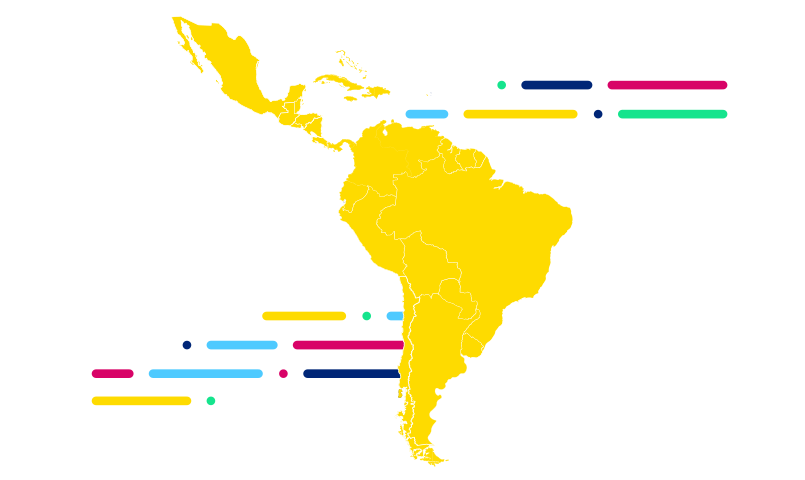
Spotlight: HRC Equidad/e Programs
Following the success of the Corporate Equality Index (CEI) in the United States, many multinational companies sought to extend inclusive practices across their global operations. To meet this demand and strengthen workplace equality beyond U.S. borders, the HRC Foundation launched the Equidad/e Programs across Latin America. These initiatives provide a practical framework grounded in nondiscrimination policies, equitable benefits, employee resource groups, public commitments, and required LGBTQ+ training and education to advance inclusion in ways that are locally informed and globally consistent.
In Mexico, the ninth edition of HRC Equidad MX engaged 240 companies, with 189 earning a score of 100% and certification as Mejores Lugares para Trabajar LGBTQ+ 2026. Developed in partnership with Alianza por la Diversidad e Inclusión Laboral (ADIL), participation today reflects extraordinary growth since the program’s launch—approximately 750% higher than the inaugural year—and includes 18 new companies this cycle. Most notably, the program potentially benefits 934,692 people—nearly one million individuals, underscoring its sustained impact and reach.
Chile helped pave the way for continued expansion in the region. Launched in 2018 in partnership with Fundación Iguales, Chile’s most recent report assessed 141 companies, with 67 earning top scores, marking a 346% increase since the program’s inaugural year. This growth reflects the country’s leadership in advancing workplace equality and its role in setting the stage for broader regional engagement.
Building on this foundation, programs in Argentina and Brazil have seen steady progress since their launch in 2021 in partnership with Instituto de Políticas Públicas LGBT+ (Argentina) and Instituto Mais Diversidade with the Fórum de Empresas e Direitos LGBTI+ (Brazil). Argentina rated 93 organizations in 2025, with 60 earning top scores, and notably expanded scope to include 16 national universities, reinforcing the role of educational institutions in shaping inclusive workplaces. Brazil rated 92 companies, with 75 achieving the maximum score, and nearly all certified companies—97.8%—offer LGBTQIA+ inclusive training programs, signaling deep commitment to education and sustained implementation. Across the current cycle, these programs collectively engage 566 organizations, underscoring how regional leadership and collaboration continue to drive meaningful progress toward workplace inclusion.
We encourage all companies with operations in Mexico, Chile, Argentina, and Brazil to actively engage their regional counterparts in our global programs and strengthen their commitment to LGBTQ+ workplace inclusion across the region. Through the CEI and the Equidad MX, Equidad CL, Equidad AR, and Equidade BR benchmarking tools, the HRC Foundation has built a comprehensive framework that promotes inclusive policies, best practices, and equitable benefits for both national and multinational corporations—positively impacting nearly 25 million employees worldwide.
Currently, HRC and its partners are still in the process of collecting data for the 2026 survey reports for Equidad CL, Equidad AR, and Equidade BR. Data used for these lists are from their most current reports.
Learn more at www.hrc.im/GlobalWorkplacePrograms.
(Partner‑Led Indices): Equidad/e are partner‑led indices delivered with local organizations to ensure culturally informed implementation and credibility: ADIL (Mexico), Fundación Iguales (Chile), Instituto de Políticas Públicas LGBT+ (Argentina), and Instituto Mais Diversidade with the Fórum de Empresas e Direitos LGBTI+ (Brazil).
Rating System and Methodology
The HRC Foundation’s CEI rating system is designed for mid- to large-sized businesses (500 full-time employees and above) and divided into four key categories of criteria:
- Non-discrimination policies across business entities;
- Equitable benefits for LGBTQ+ workers and their families;
- Supporting an inclusive culture; and
- Outreach and engagement.
Launched in 2002, the CEI is the first internationally recognized benchmarking report for businesses to gauge their level of LGBTQ+ workplace inclusion against competitors. In addition to seeing a growth in the number of highly-rated employers, the CEI has also seen great success in the reach of the survey. The number of employers officially rated has expanded from 319 original participants to a current participant count of 1450, encompassing all major industry sectors.
Invitations and Submission
The largest and most successful U.S. employers are invited to submit the CEI and are identified through the following lists*:
- Fortune magazine’s 1,000 largest publicly- and privately-traded businesses (2024 Fortune 1,000); and
- American Lawyer magazine’s top 200 revenue-grossing law firms (2025 AmLaw 200).
Additionally, any private-sector, for-profit employer with 500 or more full-time U.S. employees can request to participate, including those that are privately held.
*Note: Due to the staggered timelines of the ranking lists and when contact lists are made available, the ranking year lags the CEI survey year by one year and the CEI publication year by up to two years.
How We Obtain Information
The primary source of information for the Corporate Equality Index rating each business received is the CEI survey sent every year to previous and prospective respondents. The web-based survey included links to sample policies and other guidance, found on the HRC Foundation website.
HRC Foundation staff provided additional assistance and direct consultation throughout the process and reviewed submitted documentation (required within each section) for appropriate language and consistency with survey answers.
Invitations for the 2026 CEI survey were emailed in June of 2025 and responses were returned in September 2025. If a business had previously submitted the CEI survey, invitations were first sent to the individual(s) responsible for prior submissions. If a business had not previously submitted the CEI, survey invitations were sent to the chief executive officer or managing partner of the firm, as well as the highest-level executive(s) responsible for human resources, diversity, communications, or community engagement, if obtaining the contact information for these executives was possible.
Verified and Unverified Ratings
The 2026 Corporate Equality Index reflects a modified approach to how company information is presented in the CEI Employer Search tool (available at www.hrc.org/cei). This approach responds to an evolving environment in which many companies are navigating heightened scrutiny and competing external expectations related to how they engage publicly on workplace inclusion.
CEI remains committed to providing LGBTQ+ employees, job seekers, and other stakeholders with clear, reliable information about workplace policies and practices that affect their lives – particularly in a time of volatility. To support this goal, the 2026 CEI distinguishes between companies whose information could be confirmed through current engagement in the 2026 CEI survey process and companies for which policies and practices could not be reconfirmed during this cycle.
Accordingly, CEI ratings are identified as either verified or unverified.
Verified Ratings
HRC provides a verified score, businesses must have completed and submitted the most current survey cycle for review by the HRC Foundation’s Workplace Equality Program team.
Unverified Ratings
HRC Foundation provides an unverified rating for:
- Fortune 500 companies that have never submitted the CEI survey, and
- Previously submitting companies that did not submit a CEI survey this cycle.
The CEI report has consistently included Fortune 500 companies as part of its analysis, regardless of whether a company actively submits data in a given CEI survey cycle. Inclusion in the report does not imply participation, endorsement, or active engagement in the current CEI process, but reflects the CEI’s longstanding methodology for tracking broader trends across the Fortune 500.
For companies that have previously submitted a CEI survey, the HRC Foundation relies on their most recent validated data to maintain continuity in benchmarking. These businesses are included in aggregate findings but are given an unverified score because their current policies could not be reconfirmed during this cycle.
For all unverified ratings, the HRC Foundation conducted a thorough review of publicly available information to ensure accuracy. This included press releases and company statements to identify any changes that could impact scoring. If, for example, a company issued a statement regarding a shift in DEI commitments affecting implementation of a scored component of the CEI rubric, points were adjusted accordingly. This process ensures that even unverified ratings reflect the most accurate information available at the time of publication.
The HRC Foundation notified businesses receiving an unverified score and offered an opportunity to provide updates or clarification during the 2026 CEI survey cycle prior to the report release.
Facts about the Corporate Equality Index
Administration of the CEI
The CEI is administered by the Human Rights Campaign Foundation, a tax-exempt 501(c)(3) organization.
The HRC Foundation is dedicated to advancing LGBTQ+ equality through a strategic approach that supports lasting change. The Foundation partners with institutions across schools, workplaces, and communities to strengthen systems that promote fairness, safety, and inclusion for LGBTQ+ people. Through programs such as the Corporate Equality Index, the HRC Foundation works in collaboration with employers to assess workplace policies and practices, promote parity in benefits and protections, and encourage inclusive cultures grounded in dignity and respect.
As a 501(c)(3) organization, the HRC Foundation does not engage in political or electoral work. It operates independently of any political affiliation, with a commitment to advancing equality through non-partisan initiatives focused on education, research, and collaboration with stakeholders. Both the HRC Foundation and its partner organization, the Human Rights Campaign, are non-partisan advocates for LGBTQ+ inclusion and equality.
Principles of the CEI Criteria
For over twenty years, the CEI has upheld transparent and fair standards, fostering LGBTQ+ workplace inclusion. The HRC Foundation is committed to identifying the best in class policies and practices that improve the experiences of all employees, including LGBTQ+ employees, while providing the resources and consultation necessary for businesses to achieve their desired scores. These principles of the CEI ensure that the criteria are rigorous, measurable, and adaptable to the diverse needs of participating employers and the LGBTQ+ community.
The CEI’s criteria are designed to be rigorous yet fair, incorporating leading and best practices that any mid- to large- size employer can reasonably implement. Recognizing the diversity of U.S. employers, the criteria accommodates a range of industries, from consumer-focused businesses to specialized fields like law and technology. To support businesses in meeting these standards, the Human Rights Campaign Foundation offers templates, guidance, consultation and other resources, making implementation of the CEI criteria accessible and feasible. Additionally, the scoring emphasizes parity rather than preferential treatment, requiring employers to extend equal benefits and protections–afforded to all employees–to LGBTQ+ employees, ensuring fairness without creating undue advantages.
Transparency and objectivity are also cornerstones of the CEI criteria. Every metric is quantitatively measurable, providing clarity and accountability for all participants. The criteria are inclusive of both domestic and global policies, enabling companies to benchmark their efforts consistently across their entire operations, ensuring comparability across industries and years. For LGBTQ+ employees and job seekers, the CEI provides critical transparency by identifying workplaces where they can feel safe, valued, and supported. By publicly rating companies on their LGBTQ+ inclusion efforts, the CEI serves as a reliable resource for understanding which employers have committed to fostering affirming environments. This transparency empowers LGBTQ+ individuals to make informed decisions about where to work and contributes to creating a more equitable workforce for all employees.
Finally, attainability and reliability anchor the CEI’s approach. While new unscored questions and emerging practices are introduced to reflect ongoing developments, the core criteria remain stable for year-to-year comparisons. Furthermore, the HRC Foundation provides at least 2 survey cycles’ notice – usually in two year spans, of any significant criteria evolutions. This ensures ample time for corporate partners to prepare and adapt. This thoughtful approach enables businesses to plan strategically and continuously improve their workplace inclusion efforts without encountering unexpected shifts.
What the CEI Measures
All employers have policies that affect their employees. These policies include non-discrimination protections, benefits provisions, employee training, leave policies, appearance standards, among others. The CEI supports businesses in implementing these policies by providing guidance to ensure they consider all employees, including LGBTQ+ community. From non-discrimination standards and benefits provisions to internal employee policies and external engagement, the CEI provides a roadmap and resources to promote parity for LGBTQ+ employees in the workplace.
As more and more companies adopted inclusive benefits and policies, the CEI criteria evolved to reflect emerging best practices and meet business needs. This evolution, guided by input from expert LGBTQ+ advocates, legal professionals, and corporate leaders, responds to the changing landscape of protections for LGBTQ+ employees and their families. Over the past two decades, the CEI has introduced major criteria updates, such as equitable healthcare for transgender employees and family-formation benefits that treat same-sex and different-sex couples with more parity, aligning workplace policies with shifting social, legal, and professional realities.
What the CEI Does Not Do
The Corporate Equality Index (CEI) is a voluntary benchmarking and transparency framework intended to help companies assess and understand their workplace policies and practices. Participation does not create legal, regulatory, or contractual obligations.
The CEI does not confer preferential treatment or advantages to any group of employees. It evaluates whether workplace policies and benefits are structured to be applied consistently and equitably across an organization.
The CEI does not establish quotas, numerical targets, or required outcomes related to hiring, promotion, or workforce composition. Evaluation is based on the presence and implementation of policies, benefits, and practices, rather than demographic metrics or performance thresholds.
The CEI does not require companies to prioritize one group of employees over others. It assesses whether existing workplace protections and benefits are designed and administered in a manner that does not exclude LGBTQ+ employees.
The CEI does not mandate financial contributions to the Human Rights Campaign or the HRC Foundation as a condition of participation or access to benchmarking results, guidance, or resources.
About the “Equality 100 Award”

The CEI’s “Equality 100 Award” is a unique distinction and honors the work that companies have done to ensure a safe workplace for LGBTQ+ employees. The score is a point-in-time measure and should not be taken as an absolute and final assessment of a business’ LGBTQ+ inclusion efforts. The CEI and its associated score are one component of the greater framework of corporate citizenship, and the ways in which businesses can demonstrate meaningful allyship. In HRC’s The LGBTQ+ Corporate Citizen – A Framework for Emerging Best Practices in Allyship Report, we identify pillars that stand alongside workplace inclusion, providing additional resources to businesses on how to build inclusion across business operations.
CEI Criteria Evolution Timeline
Launched in 2002, the Corporate Equality Index established a clear, measurable framework to help employers advance fair and inclusive workplace practices. Over time, the CEI’s criteria have evolved in response to legal developments, cultural shifts, and employer experience—while remaining anchored in the principle of equal treatment for LGBTQ+ employees.

Over the past 20 years, the Corporate Equality Index has evolved from a foundational framework into a dynamic standard for workplace equality—centered on fair and equal treatment for LGBTQ+ workers. Each iteration has responded to cultural, legal, and organizational shifts. Today, the CEI stands as both a reflection of progress and a roadmap for continued advancement, guiding businesses to champion equality in every facet of their operations.
Due Diligence and Responsible Citizenship in the Corporate Equality Index
The information required to generate CEI ratings for businesses is not always fully ascertainable through public records alone. In addition to the self-reporting provided through the CEI survey, the HRC Foundation conducts a thorough review of publicly available information to help ensure the accuracy and reliability of the CEI findings.
This due diligence reflects the CEI’s responsibility not only to serve as a framework for employers, but also to provide LGBTQ+ workers, job seekers, and other stakeholders with clear and reliable information about workplace policies and practices that meaningfully affect their lives.
The HRC Foundation’s due diligence process included cross-checking policies and practices of rated businesses, reviewing connections between businesses and organizations that engage in anti-LGBTQ+ activities, and news accounts of efforts that undermine LGBTQ+ equality writ large (e.g., through case law efforts or public policy lobbying actions). To the greatest extent possible, these factors were reviewed before assigning CEI ratings. Where available information indicates that a policy or program affecting a scored component of the CEI rubric has been eliminated, points are adjusted accordingly.Businesses were invited to provide HRC
Foundation staff with any additional information or updates before this report was released.
In total, the sources used include:
- The HRC Foundation’s CEI survey;
- Case law and news accounts regarding findings of discrimination and corporate responsibility and the LGBTQ+ community-at-large; and,
- Individuals that report verifiable information to the HRC Foundation.
Clarification on DEI Statements and CEI Scoring
The Corporate Equality Index is designed to work in concert with other LGBTQ+ corporate citizenship initiatives, serving as one important tool to assess inclusion. Its focus is on policies and practices that directly impact the workplace experience for LGBTQ+ employees.
When reviewing DEI and workplace inclusion statements made over the past year, we approach score changes thoughtfully. Our goal is to keep the CEI aligned with its intended criteria while recognizing that inclusion work extends far beyond what the CEI measures. General statements about reducing diversity, equity, and inclusion (DEI) efforts do not affect CEI scores unless they directly impact a criterion within the CEI rubric. For example, if a company announces a shift in inclusion work—such as renaming initiatives or restructuring teams—but does not cite or make mention of policies and practices required by the CEI, no points are removed.
The CEI is not intended to serve as a comprehensive measure of all inclusion or corporate citizenship efforts; rather, it is a focused benchmark for LGBTQ+ workplace equality. We encourage companies to continue broader inclusion efforts beyond the CEI criteria, as these initiatives strengthen workplace culture and community trust.
As part of our due diligence, if a company—whether verified or unverified—issues a statement or other public information indicating the removal of policies or practices that affect CEI criteria, points are adjusted accordingly. In these cases, the HRC Foundation proactively communicates with the company to understand the changes and encourages them to confirm or update their information through CEI survey submission. If, after repeated outreach, the company does not submit the CEI survey, points are adjusted based on the most accurate information available. Where changes to policies or practices may have occurred but cannot be confirmed through current survey submission or publicly available information, the CEI reflects the most accurate information available at the time of publication, which may be reflected in an unverified rating.
Responsible Citizenship in the Corporate Equality Index
Employers will receive anywhere from 5 to 25 points deductions for a large-scale official or public anti-LGBTQ+ blemish through Criterion 5: Responsible Citizenship. Scores in this criterion are based on information that has come to HRC’s attention related to topics including but not limited to:
- advocating for public policies or regulations related to LGBTQ+ equality that would be detrimental to employees and their families.
- undue influence by a significant shareholder calculated to undermine a business’s employment policies or practices related to its LGBTQ+ employees;
- opposing shareholder resolutions reasonably aimed at encouraging the adoption of inclusive workplace policies;
- revoking inclusive LGBTQ+ policies or practices;
- engaging in proven practices that are contrary to the business’s written LGBTQ+ employment policies.
- directing corporate charitable contributions to organizations whose primary mission includes advocacy against LGBTQ+ equality;
- failing to uphold established commitments to the LGBTQ+ community resulting from pressure from anti-LGBTQ+ extremists
Responsible citizenship point deductions are effective for the current CEI cycle in which the infraction occurred plus one additional full survey cycle, unless the company responds to the LGBTQ+ community’s concerns.If at any time after losing points in this criterion an employer responds to the LGBTQ+ community’s concerns, HRC will re-evaluate the point deduction for that employer. The rating change may not be reflected until the following year’s Corporate Equality Index report, depending on the situation.
HRC will always seek to improve an organization’s rating and seek resolutions to benefit an organization’s LGBTQ+ workers, consumers and investors.
Scoring Criteria
Criteria 1
Workforce Protections (5 points possible)
Employment Non-Discrimination (5 points)
Businesses’ employment non-discrimination policy must include the terms “sexual orientation” and “gender identity or expression” (or “gender identity”) for all operations
Criteria 2
Inclusive Benefits (50 points possible)
To secure full credit for benefits criteria, each benefit must be available to all benefits-eligible U.S. employees. In areas where more than one health insurance plan is available, at least one inclusive plan must be available.
a. Equivalency in same- and different-sex spousal and domestic partner medical and soft benefits (10 points)
b. Equivalency in same- and different-sex spousal and domestic partner family formation benefits (10 points)
c. Comprehensive health coverage for all employees (including transgender employees) without exclusion for medically necessary care (25 points)
d. Comprehensive Health Benefits Guide (5 points). Businesses must provide a comprehensive health benefits guide for its employees that includes coverage information pertinent to the LGBTQ+ community
Criteria 3
Supporting an Inclusive Culture (25 points possible)
a. Workforce Training and Accountability (5 points)
Businesses must demonstrate a sustained and accountable commitment to diversity and cultural competency by implementing at least one of the following training or development elements that incorporate LGBTQ+ topics:
- New Hire Training (outlines non-discrimination policy, including protected characteristics and practical examples)
- Manager Training (outlines non-discrimination policy, including protected characteristics and practical examples)
- Ongoing/Broader Professional Dev/Training (incorporates diversity-related topics into broader professional development or leadership training)
- Comprehensive Training Approach (integrates broader diversity and inclusion concepts into professional development or educational programs)
b. Workforce Data Collection (5 points)
Businesses must implement at least one of the following data collection efforts
- Anonymous employee engagement or climate surveys conducted on an annual or biennial basis allow employees the option to identify as LGBTQ+
- Data collection forms that include employee race, ethnicity, gender, military and disability status — typically recorded as part of employee records — include optional questions on sexual orientation and gender identity.
- Board (or other governing body) member demographic data collection include the option for individuals to report their sexual orientation and gender identity or self-identity as LGBTQ+
c. Inclusion Best Practices (5 points)
Businesses must have both of the following best practices
- Gender transition guidelines with supportive restroom, dress code, documentation guidance and practical guidance on navigating an employee’s transition
- Implementation of the at least one (1) of the following policies or practices
- Inclusive restroom/facilities policy
- Gender-neutral dress code
- Communication or guidance around optional sharing of gender pronouns
d. Employee Group or Diversity Council (10 points)
Businesses must have either of the following:
- LGBTQ+ Employee Resource Group accessible to all employees
- Diversity Council that includes LGBTQ+ topics
Criteria 4
Outreach and Engagement (20 points possible)
a. Outreach or Engagement (15 points)
Businesses must demonstrate LGBTQ+ engagement that extends across the firm by implementing at least one of the following outreach or engagement initiatives:
- Employee recruitment efforts that reach LGBTQ+ applicants
- Supplier programs that include certified LGBTQ+ suppliers
- Marketing or advertising that reflects or reaches LGBTQ+ communities
- Philanthropic support for at least one LGBTQ+ organization or event (e.g.: financial, in kind or pro bono support)
- Products and services that are inclusive of LGBTQ+ people
b. External Partnerships & Business Practices (5 points)
Businesses must have both of the following:
- Inclusive contractor/supplier non-discrimination standards (if non-discrimination standards exist)
- Inclusive Philanthropic Giving Guidelines prohibiting donations to non-religious organizations that have a written policy of discrimination against the LGBTQ+ community
Criteria 5
Responsible Citizenship (Up to -25 points)
Employers will receive up to 25 points deducted from their score for a large-scale official or public anti-LGBTQ+ blemish on their recent records. Scores on this criterion are based on information that has come to HRC’s attention related to topics that are harmful to the advancement of LGBTQ+ equality and inclusion.
(See more information in the “Responsible Citizenship in the Corporate Equality Index” for more information)
CEI 2026 Maximum Score: 100 points

HRC Business Advisory Council
Founded in 1997, the Human Rights Campaign Business Advisory Council brings together leaders from a wide range of industries to provide expert guidance to the HRC Workplace Equality Program. Members offer strategic advice on LGBTQ+ workplace issues, drawing on their professional experience and deep knowledge of business practices.
While members do not serve as official representatives of their companies, their perspectives help shape the Corporate Equality Index and advance best practices for workplace inclusion.
We extend our sincere gratitude to the Council members for their leadership, insight, and commitment throughout the 2026 CEI cycle. Their contributions continue to strengthen the CEI as the nation’s leading benchmark for LGBTQ+ workplace equality.
About the Workplace Equality Program
Since its founding in 1998, the Human Rights Campaign Foundation’s Workplace Equality Program (WEP) has been committed to advancing equity and inclusion for LGBTQ+ workers. Through education, benchmarking, and strategic partnerships, WEP has motivated employers to adopt inclusive benefits, policies, and practices that directly impact the lives of LGBTQ+ employees and their families.
Today, WEP drives LGBTQ+ inclusion across industries through a comprehensive suite of services designed for both businesses and the LGBTQ+ community. At the core is the Corporate Equality Index (CEI), HRC’s flagship benchmarking tool that evaluates companies on policies, benefits, and workplace culture. HRC works directly with C-suite leaders through one-on-one consultations to review CEI results, identify gaps, and develop actionable strategies, helping organizations demonstrate accountability and leadership in LGBTQ+ inclusion.
Through Advisory Services, HRC provides tailored guidance for companies seeking to strengthen equity initiatives. This includes support for expanded inclusion stakeholders such as general counsel, communications, and marketing teams, ensuring that policies, messaging, and practices across the organization reflect and reinforce inclusive values.
Workplace Training equips managers, HR professionals, and cross-functional teams with the knowledge and skills to foster inclusive cultures. HRC delivers interactive programs on topics such as unconscious bias, LGBTQ+ terminology, and inclusive leadership, helping organizations translate policy into practice at every level.
Employee Engagement initiatives empower staff to actively contribute to inclusion efforts. HRC provides guidance on establishing LGBTQ+ employee resource groups, mentoring programs, and ally networks, while also offering resources for LGBTQ+ employees and community members to identify inclusive workplaces and brands, ensuring they know where to work, shop, and thrive.
Finally, HRC leverages its Public Policy expertise to advocate for laws and regulations that protect LGBTQ+ workers. By partnering with businesses to understand legal obligations, compliance strategies, and emerging policy trends, HRC helps organizations align workplace progress with broader societal protections while fostering advocacy for lasting equality.
Together, these services position HRC as a trusted partner for businesses striving to create inclusive, equitable, and high-performing workplaces, while providing the LGBTQ+ community with the knowledge and tools to navigate the professional and consumer landscape with confidence.